

Key Points and Summary – Retiring USAF Chief Gen. David Allvin says Boeing has begun building the first F-47—the Air Force’s sixth-generation NGAD fighter—with a first flight targeted for 2028.
-Awarded in March 2025, the ~$20B EMD program pairs the F-47 with AI-enabled Collaborative Combat Aircraft and the B-21 Raider as a “family of systems” for long-range, stealthy air dominance.
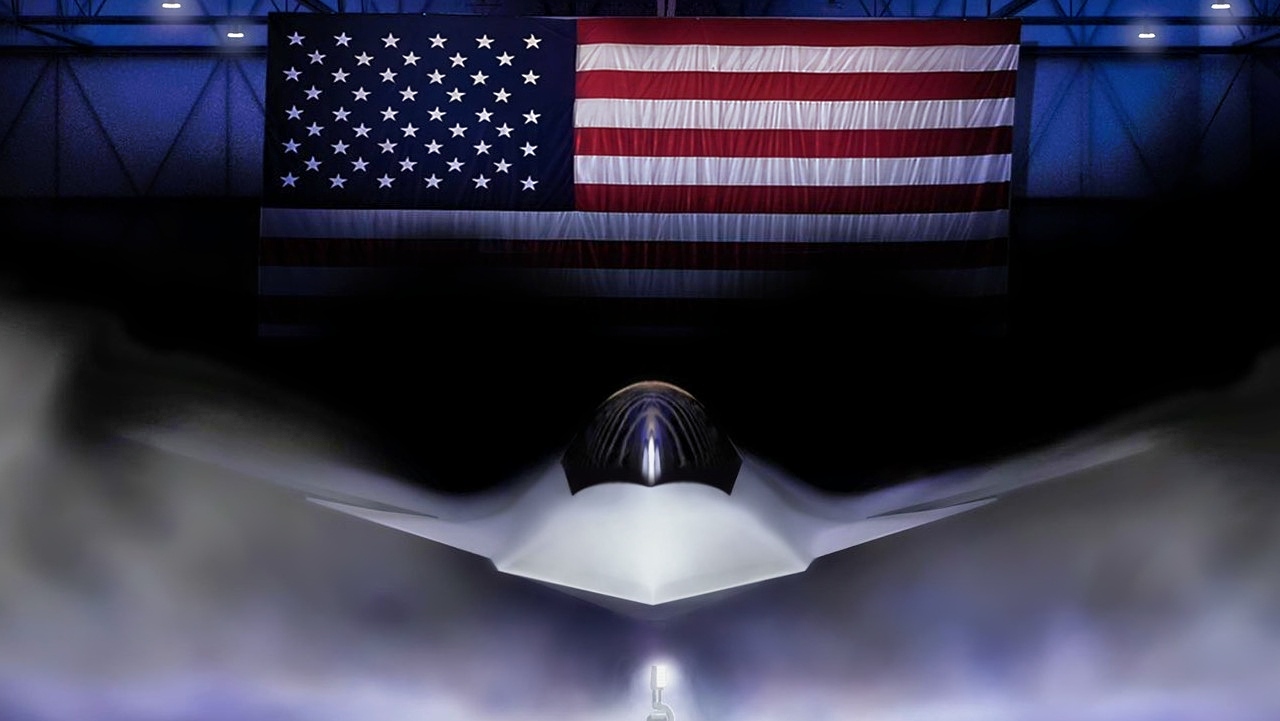
F-47 Fighter from U.S. Air Force. Image Credit USAF.
-Expected features include improved low observability, sensor fusion, >1,000-nm combat radius, and >Mach 2 speed.
-Allvin warned schedule discipline is strategic as China’s tailless J-36 advances with its own “loyal wingman” concept. Bottom line: NGAD must “go fast” to keep the U.S. in front.
Retiring USAF Chief Reveals When the F-47 Will Fly
The U.S. Air Force could see its upcoming sixth-generation stealth fighter jet fly for the first time in 2028, according to Chief of Staff Gen. David Allvin.
Speaking on Monday, Allvin revealed how the first F-47 jet, developed as part of the Air Force’s Next Generation Air Dominance (NGAD) program, is currently being built by Boeing.
The comments come as Allvin prepares to retire, only partway through his four-year term.
The comments were made during the Air, Space and Cyber Conference hosted by Air and Space Forces. During a discussion, Allvin described how Boeing’s team has been working quickly to bring the next-generation aircraft into production after their design was picked in March.
“It’s the platform that, along with the rest of the systems, is going to ensure dominance into the future,” Allvin said. “In the few short months since we made the announcement, they are already beginning to manufacture the first article. We’re ready to go fast. We have to go fast.”
The news suggests that Boeing’s sixth-generation fighter program is on track to deliver quickly, having already begun manufacturing the initial airframe only six months after President Donald Trump announced that the contract was won by the manufacturer.
During the discussion, Allvin also reiterated his belief that the Air Force must continue to modernize, and to do so more rapidly. Allvin said that, alongside the F-47, the Air Force must continue work on building collaborative combat aircraft (CCA) – AI-powered drones designed to fly alongside the next-generation fighter.
The Air Force Chief of Staff also stressed the importance of the upcoming B-21 Raider, the successor to the iconic B-2 Spirit bomber that is expected to be fielded in unprecedented numbers.

A B-21 Raider is unveiled at Northrop Grumman’s manufacturing facility on Air Force Plant 42 in Palmdale, California, Dec. 2, 2022. The B-21 will be a long-range, highly survivable, penetrating strike stealth bomber capable of delivering both conventional and nuclear munitions. (U.S. Air Force photo by Airman 1st Class Joshua M. Carroll)
“We’re following through on ensuring and advocating for the readiness that we need to be able to fight today to demonstrate we can pop the jab, and we can put them on the canvas,” Allvin said in reference to the B-2 bomber and the recent Operation Midnight Hammer strikes against Iranian nuclear facilities.
The F-47 NGAD: A History
The NGAD program first emerged in the mid-2010s and was intended to secure a replacement to the F-22 Raptor in the form of a sixth-generation air superiority platform.
More than a single aircraft, however, the upcoming F-47 will work as part of a “family of systems” that consists of a sixth-generation fighter, unmanned CCA drones, advanced sensors, stealth, weapons, and propulsion technologies.
The F-47, awarded to Boeing in March 2025 under a roughly $20 billion engineering and manufacturing development contract, is expected to feature sensor fusion technologies, long-range strike capability, and a modular design intended to make future upgrades simpler and quicker to achieve.
It is expected to have a combat radius of over 1,000 nautical miles, a top speed of more than Mach 2, and improved stealth over existing fifth-generation fighters. The recent comments from Allvin indicate that the program remains on track, with first flight expected in 2028 and operational fielding in the 2030s.

F-22A Raptor in the Air Force Museum. Image Credit: National Security Journal Original Photo.
The aircraft is designed to compete with sixth-generation programs like China’s J-36, a tailless, stealth design first seen in 2024.
During the recent conference, Allvin addressed China’s rapid military modernization efforts, including the development of new weapons and aircraft designed to both counter modern American fighters and bombers, and facilitate an invasion of Taiwan.
“We’re paying attention to tomorrow,” Allvin said, adding that a plan is “in place.”
“There’s a lot of change going on right now. And it’s perfectly natural to say, let’s catch your breath a bit. Let’s sort of take stock of things. But in this environment, with the consequences on the other side of it, we have to beware of the familiar. Be cautious about the warm blanket of the comfortable. Because you know what? That may not be good enough. That just may not be good enough because the adversary is not taking a knee.”
“When the President asks tonight, next week, next year, next decade, ‘Can you still do that?’ We have to be able to say, ‘Hell yes we can.’”
China Is Top of Mind
China’s efforts with the J-36 illustrate the kind of pressure driving the NGAD and F-47 timelines.

J-36 Fighter YouTube Screenshot/Artist Rendering.

J-36 Fighter Artist Rendition from X Screenshot
The Chengdu J-36 is a heavy stealth jet that could be fielded before or shortly after America’s F-47.
Recent imagery of the aircraft shared online confirms it will feature a side-by-side cockpit, multiple internal weapons bays, and advanced inlet and exhaust shaping – all consistent with reports that the aircraft is built for stealth, range, payload.
The cockpit design also suggests that the aircraft, like the F-47, has been designed for use alongside China’s “loyal wingmen” drones – a CCA-like concept. The U.S. NGAD/F-47 program has made strides, but Chinese momentum appears to be accelerating.
For the F-47, staying on schedule is a strategic necessity for the United States. Every month of delay risks narrowing the gap and allowing China to field the first sixth-generation stealth fighter.
About the Author:
Jack Buckby is a British author, counter-extremism researcher, and journalist based in New York who writes frequently for National Security Journal. Reporting on the U.K., Europe, and the U.S., he works to analyze and understand left-wing and right-wing radicalization, and reports on Western governments’ approaches to the pressing issues of today. His books and research papers explore these themes and propose pragmatic solutions to our increasingly polarized society. His latest book is The Truth Teller: RFK Jr. and the Case for a Post-Partisan Presidency.
More Military
Russia Now Has a Death Star Battlecruiser
France’s Charles de Gaulle Aircraft Carrier Has a Message for Any Navy on Earth
Russia’s Last Aircraft Carrier Might Soon Be Headed to the Grave