


Key Points and Summary – The future of the U.S. Navy’s F/A-XX sixth-generation fighter remains in limbo after the Trump administration froze the program, favoring the Air Force’s new F-47.
-The Navy insists the F/A-XX is critical for its aircraft carriers to maintain air superiority.
-New artwork from competitor Boeing shows its F/A-XX design closely resembles its winning F-47, sparking debate over whether one company could build both jets.
-The high stakes are real: canceling the program could cripple the Navy’s future, while the final decision will have immense consequences for the U.S. defense industrial base.
F/A-XX Fighter Problems Aren’t Going Away
The saga of the United States Navy’s next-generation fighter (NGAD) isn’t over. The reveal of new artwork from Boeing, along with continued activism from the Navy and within Congress, suggests that the F/A-XX project may still have some life.
Although the Trump administration seems to have a strong preference for canceling the F/A-XX and concentrating on the F-47, neither the Navy nor Congress have given up on the project.
The Navy still believes that a sixth-generation fighter is necessary to establish air superiority in contested space, and believes that air superiority will enable the carrier air wing to conduct the rest of its missions. The F/A-XX is thus critical to the future combat power of the carrier fleet.
More on the F/A-XX
To recap, the F/A-XX is supposed to be the Navy’s new sixth-generation fighter, intended to replace the F/A-18 Super Hornet and complement the F-35C Joint Strike Fighter.
A selection between competitive bids from Boeing and Northrop Grumman was scheduled for March.
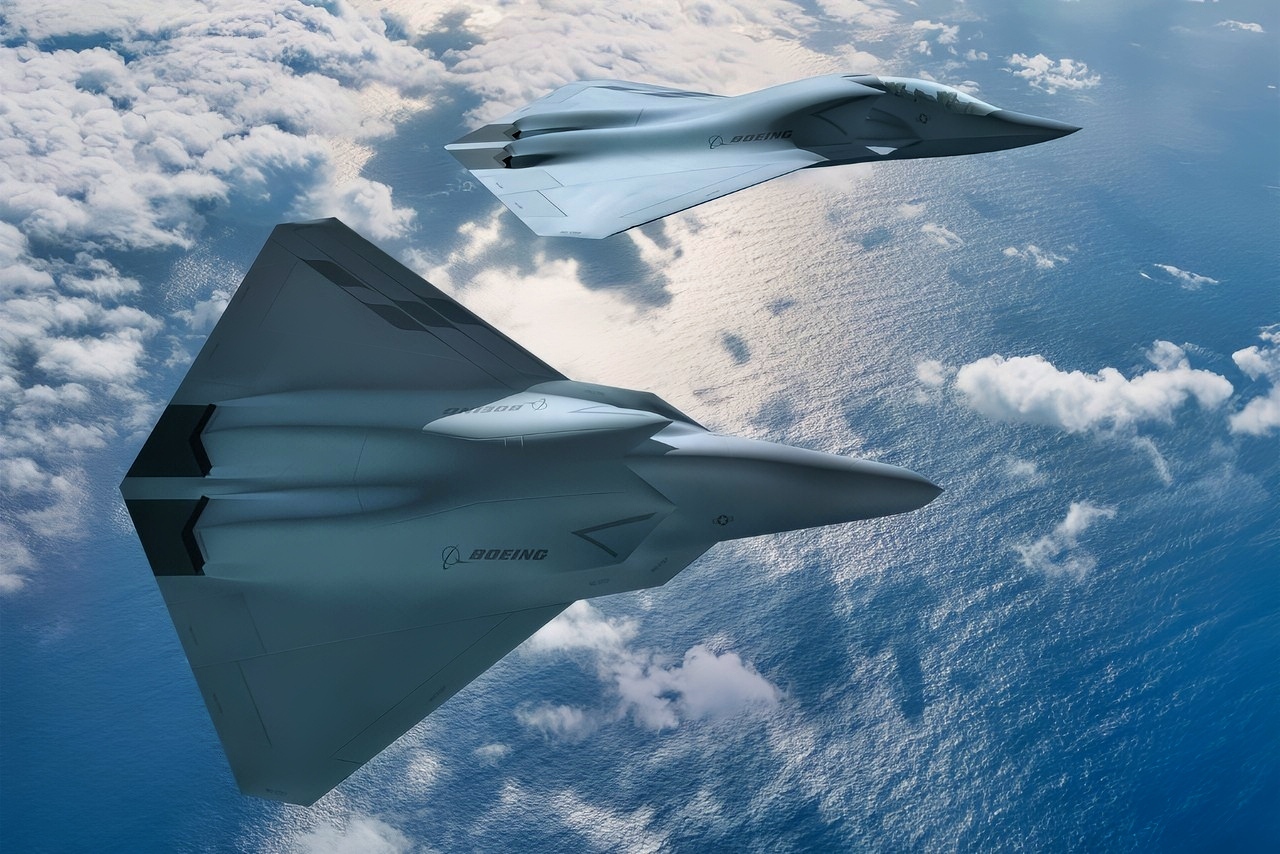
F/A-XX Fighter from Boeing. Image Credit: Boeing.
Still, the aircraft was left in limbo after the Department of Defense froze the process, with rumors swirling that no decision would be forthcoming. Officially, concerns about whether the US aviation industry could support two sixth-generation fighter projects at the same time motivated the administration’s decision to slow the process.
Sister to the F-47?
Earlier this year, Boeing won the downselect process for the Air Force’s future fighter project, an aircraft that will become the F-47.
Boeing is also a participant in the F/A-XX competition, along with Northrop Grumman. Unsurprisingly, Boeing’s entry appears to resemble the F-47.
It is not clear how much cross-pollination took place between the two design teams. Still, it is to be expected that the same company would produce two aircraft with similar characteristics, especially since the aircraft share basically the same mission.
This revelation comes on the heels of the release of artwork from Northrop Grumman, which suggested a connection between the new fighter project and the YF-23 Black Widow, a competitor of the F-22 Raptor.

Shown is a graphical artist rendering of the Next Generation Air Dominance (NGAD) Platform. The rendering highlights the Air Force’s sixth generation fighter, the F-47. The NGAD Platform will bring lethal, next-generation technologies to ensure air superiority for the Joint Force in any conflict. (U.S. Air Force graphic)
Will a Decision Happen?
That Boeing and Northrop Grumman still have an interest in this program suggests that there’s still behind-the-scenes momentum to save the F/A-XX. With respect to the competition, most analysts believe it is unlikely that Boeing will win the downselect for both the F-47 and the F/A-XX.
It is generally believed that the health of the defense industrial base depends upon a variety of suppliers, each working to their strengths.
Of course, Lockheed Martin ended up producing both the F-22 Raptor and the F-35, but more than a decade (and the end of the Cold War) separated those two competitions.
That said, if Boeing could plausibly argue that the F-47 and its Navy counterpart have enough similarities that certain economies of scale could be captured, it might make sense to sole-source the two projects.
What Happens Now?
The implications of the F/A-XX decision are significant. If the Pentagon axes the program, the Navy will need to rely on the F-35C and (possibly) a modified F-47 to equip its carrier fleet. Cancellation could portend a more significant change in priorities, with manned naval aviation deprioritized in favor of unmanned options.
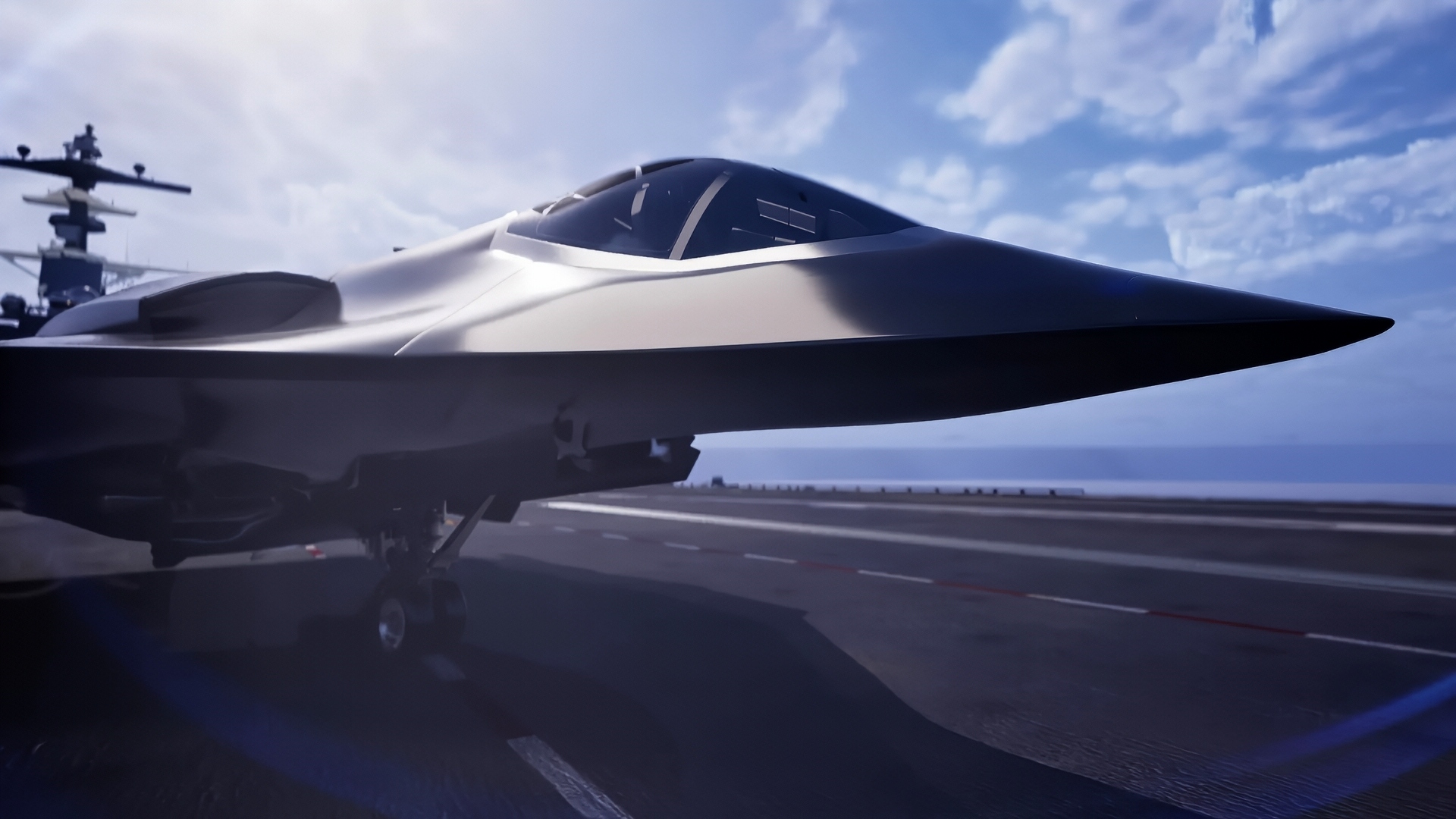
F/A-XX Handout Photo from Northrop Grumman.
In short, leaving the Navy without a future fighter puts the service in an extremely dangerous position, as it has committed so much of its strength to the aircraft carrier as central platform.
But the selection of either Boeing or Northrop Grumman would also have immense implications for the future of the US aerospace industry, as a world in which Boeing is a double-winner of the sixth generation fighter contest is much different than a world in which the work is shared between defense giants.
About the Author: Dr. Robert Farley, University of Kentucky
Dr. Robert Farley has taught security and diplomacy courses at the Patterson School since 2005. He received his BS from the University of Oregon in 1997, and his Ph. D. from the University of Washington in 2004. Dr. Farley is the author of Grounded: The Case for Abolishing the United States Air Force (University Press of Kentucky, 2014), the Battleship Book (Wildside, 2016), Patents for Power: Intellectual Property Law and the Diffusion of Military Technology (University of Chicago, 2020), and most recently Waging War with Gold: National Security and the Finance Domain Across the Ages (Lynne Rienner, 2023). He has contributed extensively to a number of journals and magazines, including the National Interest, the Diplomat: APAC, World Politics Review, and the American Prospect. Dr. Farley is also a founder and senior editor of Lawyers, Guns and Money.
More Military
The M10 Booker Light Tank Is Dead
SR-72 Darkstar Might Never Fly
The U.S. Navy’s ‘Achilles Heel’: China’s Underwater Drones




Pingback: More about the Planes that Go on Boats - Lawyers, Guns & Money