


Key Points and Summary – The strike at Boeing’s military aircraft facilities, now a month old, is at a stalemate with no new talks scheduled. The union, representing thousands of workers, has made a direct appeal for President Trump to intervene as the deadlock threatens work on the new F-47 fighter.
-However, an analysis suggests Boeing holds the upper hand.

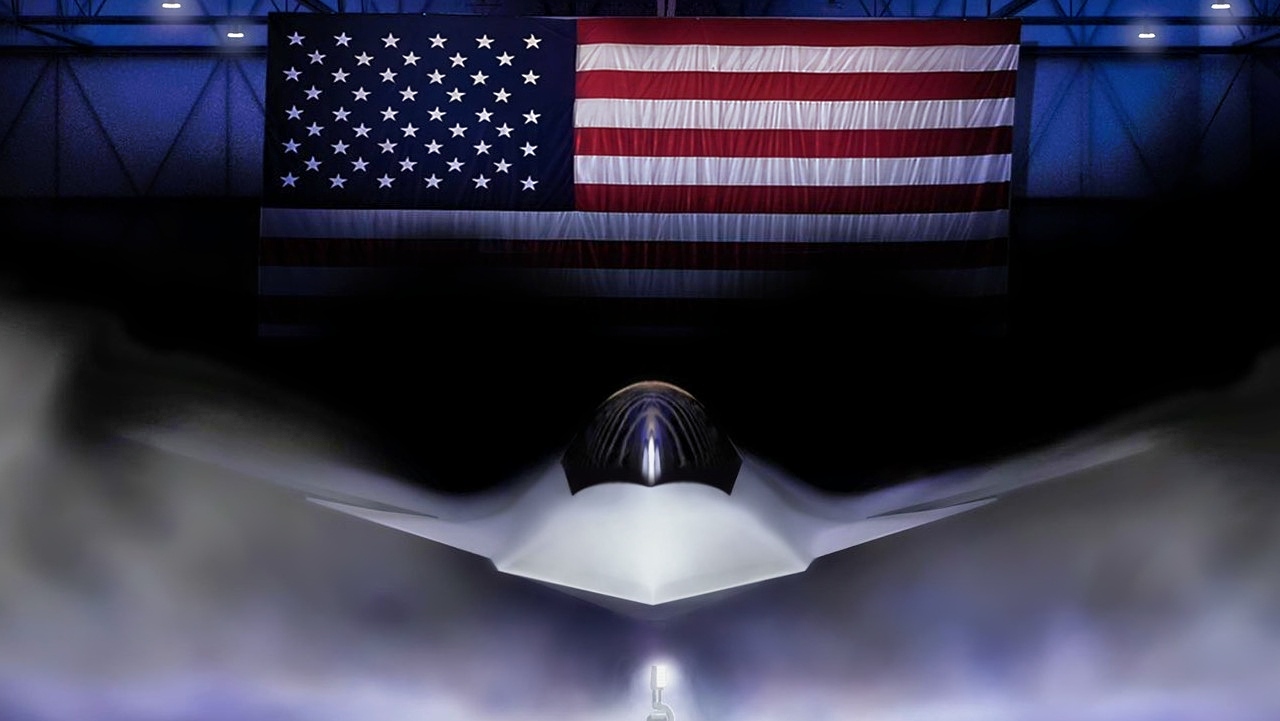
Shown is a graphical artist rendering of the Next Generation Air Dominance (NGAD) Platform. The rendering highlights the Air Force’s sixth generation fighter, the F-47. The NGAD Platform will bring lethal, next-generation technologies to ensure air superiority for the Joint Force in any conflict. (U.S. Air Force graphic)
-Unlike a previous, high-profile strike that crippled its critical commercial aircraft division, this walkout affects the less financially crucial defense sector, giving the company less incentive to quickly offer a sweeter deal to the union.
Boeing F-47 Under Threat from Strike?
It’s been nearly a month since thousands of Boeing workers in the St. Louis area went out on strike, after previous talks failed to lead to an agreement. The strike began months after Boeing landed a massive contract to build the new F-47 jet, and set off fears that work on the new NGAD fighter could be delayed.
Weeks later, there’s little sign of progress in the negotiations.
Per the TV station KSDK, the two sides returned to the bargaining table on Monday, but there was “no breakthrough” in the talks.
“There was no progress made today, and we’re hoping to meet more during the week. The ball is in the company’s court,” the International Association of Machinists and Aerospace Workers District 837 said in a statement.
A subsequent report by Reuters stated that talks had been halted, at least until after Labor Day.
“There are no negotiations currently scheduled,” Boeing told Reuters in a statement.
After that, the Congressional Labor Caucus, a group of pro-labor members of Congress, urged Boeing to get back to the table.
“We urge Boeing to come back to the bargaining table with the Machinists union,” the caucus said on X. “Boeing workers are the backbone of the company, and it’s time for them to receive the strong contract that they deserve.”
F-47 Fighter from U.S. Air Force. Image Credit USAF.
After the union rejected an earlier offer, Boeing withdrew its $5,000-per-worker signing bonus.
On August 11, the union sent a letter to lawmakers asking them to push Boeing to return to the table.
An Appeal to Trump
On August 22, Brian Bryant, the head of the striking union, made a direct appeal to the president of the United States.
“I would request the president of the United States get involved in these negotiations and get this company back to the table since they are the ones who are building the military planes for his military,” Bryant said on a picket line this week, per a local news report.
President Trump does not appear to have commented on the strike at all.
Who Has the Upper Hand?
According to a Bloomberg News analysis, Boeing has the advantage in the dispute.
“The striking workers help build aircraft, including the F-15 and, among other things, produce kits that turn dumb bombs into smart ones in facilities near St. Louis, Missouri. This labor struggle has drawn little publicity compared with the high-profile strike at the end of last year that shut down commercial aircraft production for 53 days,” Bloomberg wrote.
The analysis notes that Boeing was under “intense pressure from investors and customers” to solve the previous strike, which was larger and concerned many more workers.
“Boeing’s financial future — and consequently its stock price — hinges on the planemaker revamping its manufacturing culture and cranking up production at its commercial airplanes’ unit. The company has a backlog of 5,900 commercial aircraft worth $522 billion, and a smooth ramp-up of production will turn those orders into a cash machine,” Bloomberg News said.
“That’s not the case for the defense, space and security unit, which has a backlog of $74 billion. The unit has been losing money after the company got into trouble with fixed-rate contracts that failed to anticipate an inflation surge. While investors expect the business to rebound eventually, defense work doesn’t make or break Boeing’s finances like the commercial unit does.”

F-47 Lockheed Photo. Image Credit: Lockheed Handout.
Therefore, the union’s position is made weaker by contingency plans that have kept factories operating.
The analysis also noted that the last time this union went on strike, in 1996, the strike lasted more than three months.
“Time is on Boeing’s side. The last time District 837 machinists went on strike, in 1996, the walkout lasted 99 days. One side will have to give ground. If the company ends up sweetening its offer, it won’t be by much,” Bloomberg said.
About the Author: Stephen Silver
Stephen Silver is an award-winning journalist, essayist, and film critic, and contributor to the Philadelphia Inquirer, the Jewish Telegraphic Agency, Broad Street Review, and Splice Today. The co-founder of the Philadelphia Film Critics Circle, Stephen lives in suburban Philadelphia with his wife and two sons. For over a decade, Stephen has authored thousands of articles that focus on politics, national security, technology, and the economy. Follow him on X (formerly Twitter) at @StephenSilver, and subscribe to his Substack newsletter.
More Military
Dassault Rafale vs. J-20 Fighter from China: Who Wins?




Tom Steele
September 2, 2025 at 11:35 am
The building and all the jigs and tooling where the F-47 will be built is still under construction. The strike has no affect on that.