


Key Points and Summary – China’s mysterious J-36 is a rumored sixth-generation stealth fighter that has been spotted twice in the last year.
-While its capabilities are speculative, the design is thought to feature a tailless delta wing and a unique three-engine configuration.
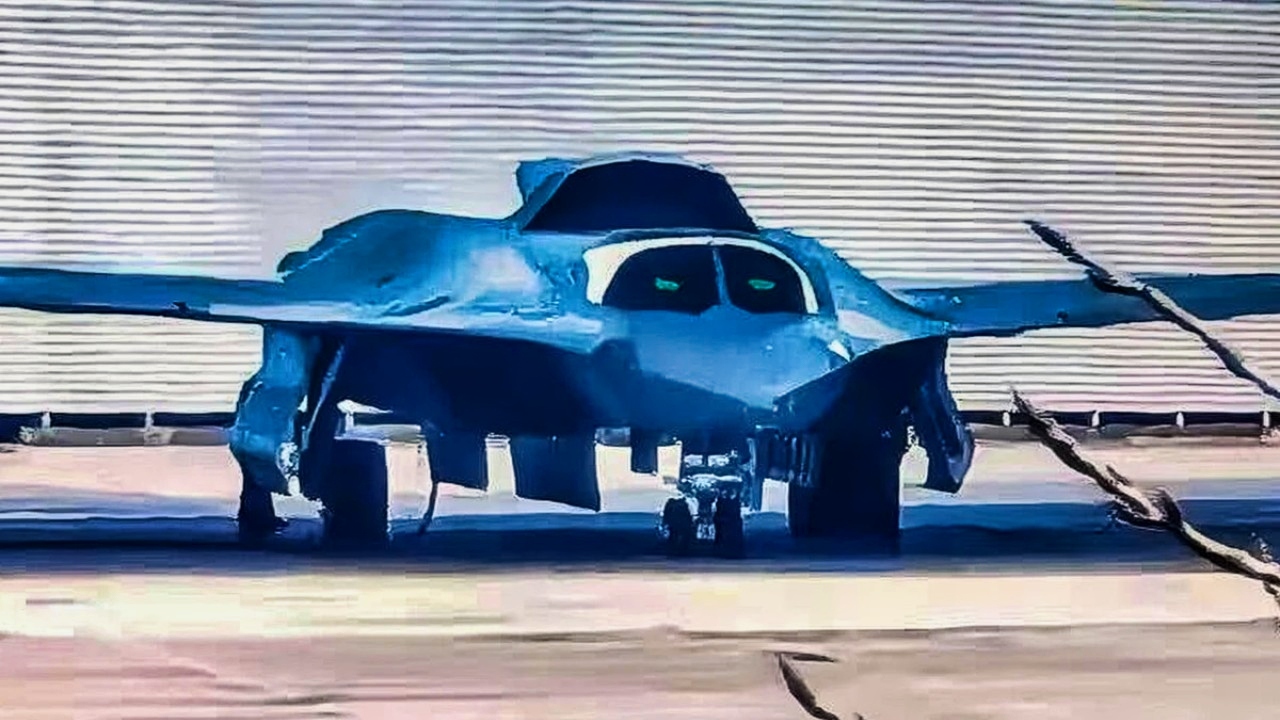
J-36 Fighter from X Screenshot. Image Credit: X Screenshot.
-The J-36 is likely a technology demonstrator and China’s potential answer to the U.S. F-47, rather than an operational carrier aircraft as some have rumored.
-If developed as a heavy fighter-bomber capable of carrying nuclear-equipped hypersonic weapons, the J-36 could seriously disrupt the strategic balance and tip it in China’s favor.
China’s J-36 Is the Stealth Fighter Mystery We Can’t Turn Away From
Little is known about China’s J-36 stealth fighter, but there have been at least two sightings of it in the last 12 months.
This is a speculative airplane with presumed air superiority features and the ability to evade radar. If rumors are correct, it could also be planned to engage in manned-unmanned teaming with drones and to boast a next-generation design that is seen as a departure for Chinese warplane manufacturing.
Is This a Carrier-based Airplane?
Internet sleuths spotted the J-36 flying over Chengdu in December 2024, and The War Zone shared an image of the J-36 this spring. One report suggests the tailless, diamond-shaped delta wing J-36 may have landed earlier this year on the Fujian carrier during a storm that kicked up 18-foot waves.
That seems like a stretch. The J-36 is likely more of a concept prototype, or a technology demonstrator for next-generation flight, and not something that is ready for naval deployment. It was probably a different airplane that landed on the Fujian. Still, the J-36 has captured the imagination of aerospace enthusiasts.

J-36 Fighter from China. Image Credit: Creative Commons.
The J-36 number is not official, but rather comes from a serial number spotted on the tail of the plane in 2024. This likely means the plane is still in development – it is not ready for full-time deployment or geared for serial production.
The People’s Liberation Army Navy Could Be Salivating
China would love to have a sixth-generation naval warbird. They do reportedly have the J-35B, a naval version of the J-35A land-based stealth fighter. The Chinese have three functioning aircraft carriers, with the ability to keep two of them in the water at all times. This carrier force is projecting power on a regular basis. It is consistently steaming in the First Island Chain, where China has territorial claims, and also sails into the Second Island Chain.
A Big Boost to Chinese Naval Strategy
If the J-36 is real, it would give China another means to disrupt East Asia. It would be China’s third stealth fighter, with two that might fly from carriers. Even the United States has only one carrier-borne stealth fighter – the F-35C.
Is This Another F-47?
What if, instead, the J-36 is the answer to the U.S. Air Force’s F-47? This would be even more troubling. The F-47 will be a “flying super computer” with advanced artificial intelligence features in the cockpit. The F-47 will be able to control a flight of Collaborative Combat Aircraft – drones that will enable more ground strike options, intelligence collection, electronic warfare, and battle damage assessment.
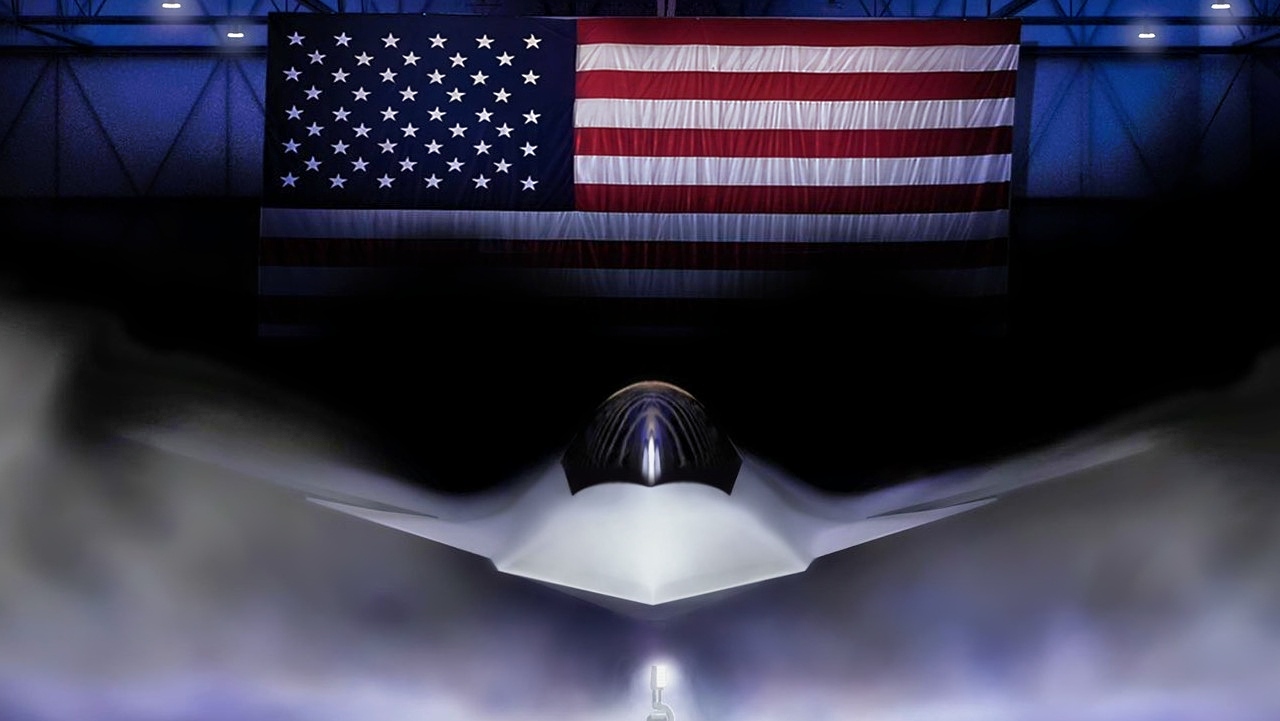
F-47 Fighter from U.S. Air Force. Image Credit USAF.
The Chinese would love to answer the United States with their own sixth-generation system. That would mightily frustrate U.S. President Donald Trump, who has expressed his enthusiasm about the F-47.
“Preliminary estimates of the J-36 suggest a length of around 22 meters and a wingspan of around 20 meters, though some have suggested a length as great as 26 meters,” according to The Diplomat. “It features a low observable, double delta tailless flying wing planform, with a rather voluminous and blended fuselage. A canopy is present, with some unconfirmed rumors that it may feature a two-pilot cockpit with side-by-side seating.”
Three Engines Will Enable it to Knife Through the Air
What would set the J-36 apart is its reported three-engine configuration. These engines could be WS-10s or WS-15s, but working together, they would create more than enough power for thrust vectoring, and stellar climbing ability with a high ceiling. There would be no problem if such a next-generation warbird lost an engine in combat. It would likely have power and speed to spare, thanks to the triple powerplants.
The J-36 is considered a heavy airplane, meaning it might act as a nuclear-capable fighter-bomber. That would be a serious issue for the United States, and for Chinese rivals in the region who fear Beijing’s growing nuclear capability.
The genesis of the J-36 reportedly goes back to 2018, when Wang Haifeng, the chief designer for the Chengdu Aerospace Corporation, looked at various concepts for a sixth-generation fighter. Chengdu put in eight different proposals. They tested four prototypes and sent the units into wind tunnels and other types of test and evaluation.
The research and development was comprehensive.

J-36 Fighter. Image Credit: Screenshot from X.
“A pivotal moment in the aircraft’s development occurred in October 2021 when observers spotted an aircraft with a tailless design at CAC facilities. This sighting corresponded with intelligence reports suggesting Chinese designs would incorporate tailless flying wing or flying arrowhead configurations. These design choices were specifically selected to provide enhanced broadband stealth characteristics compared to fifth-generation fighters,” according to International Defence Analysis.
I’m still skeptical about the J-36. There have been only two legitimate sightings so far. I’m not sure the carrier landing was the next-generation fighter, as rumored. It does make sense that China would love to have two carrier-based stealth fighters. This would be a noteworthy achievement, but there is little reason to believe it is close to happening.
The J-36 has potential as a heavier fighter-bomber that could carry a nuclear-equipped hypersonic weapon. That is something to watch. It could tip the nuclear balance in East Asia toward China, which is forging ahead in the manufacture of nuclear weapons – with no plans for arms control talks with the United States.
About the Author: Dr. Brent M. Eastwood
Brent M. Eastwood, PhD is the author of Don’t Turn Your Back On the World: a Conservative Foreign Policy and Humans, Machines, and Data: Future Trends in Warfare plus two other books. Brent was the founder and CEO of a tech firm that predicted world events using artificial intelligence. He served as a legislative fellow for U.S. Senator Tim Scott and advised the senator on defense and foreign policy issues. He has taught at American University, George Washington University, and George Mason University. Brent is a former U.S. Army Infantry officer. He can be followed on X @BMEastwood.
Hypersonic Weapons In-Depth
Russia’s Hypersonic Missiles Summed Up in 4 Words