


NGAD Key Points and Summary – The U.S. Air Force’s F-47, its sixth-generation Next Generation Air Dominance (NGAD) fighter, may be years ahead of schedule, as a full-scale flight demonstrator secretly flew back in 2020.
-This early flight, revealed by a top Pentagon official, gives the U.S. a significant head start over China’s rival J-36 and J-50 programs.
-The F-47, now being developed by Boeing with strong backing from the Trump administration, is envisioned as an ultra-stealthy, Mach 2+ “super computer” capable of controlling drone wingmen and launching hypersonic weapons, ensuring American air dominance for decades.
‘New’ F-47 NGAD May Have Made Its First Flight in 2020
We forget that the F-47 NGAD actually flew much earlier than initially thought.
Most casual military observers figure the airplane is brand new, judging from the highly anticipated release to the public by President Donald Trump in the Oval Office earlier this year.
However, the first flight of the Next-Generation Air Dominance fighter took place in 2020.
This indicates that the United States is ahead of or on par with China in sixth-generation flight, having pursued it for at least five years.
The flight of the first NGAD became a novelty that hadn’t been seen since the testing of the Joint Strike Fighter in 2000, which became the F-35.
American Sixth-Generation Technology Demonstrator Has Already Flown
“We’ve already built and flown a full-scale [sixth generation] flight demonstrator in the real world, and we broke records in doing it,” Will Roper, Director of the Pentagon’s Strategic Capabilities Office, told Defense News in 2020. “We are ready to go and build the next-generation aircraft in a way that has never happened before.”
The F-47 Will Be Chock Full of Interesting Features
At the time, the Air Force was tight-lipped about details of the NGAD.
Since then, some features have dribbled out, heightening the excitement surrounding it.
The MACH 2 F-47 will be a flying “super computer,” perhaps filled with artificial intelligence and quantum computing gadgetry and software in the cockpit. The future NGAD will likely launch hypersonic missiles.
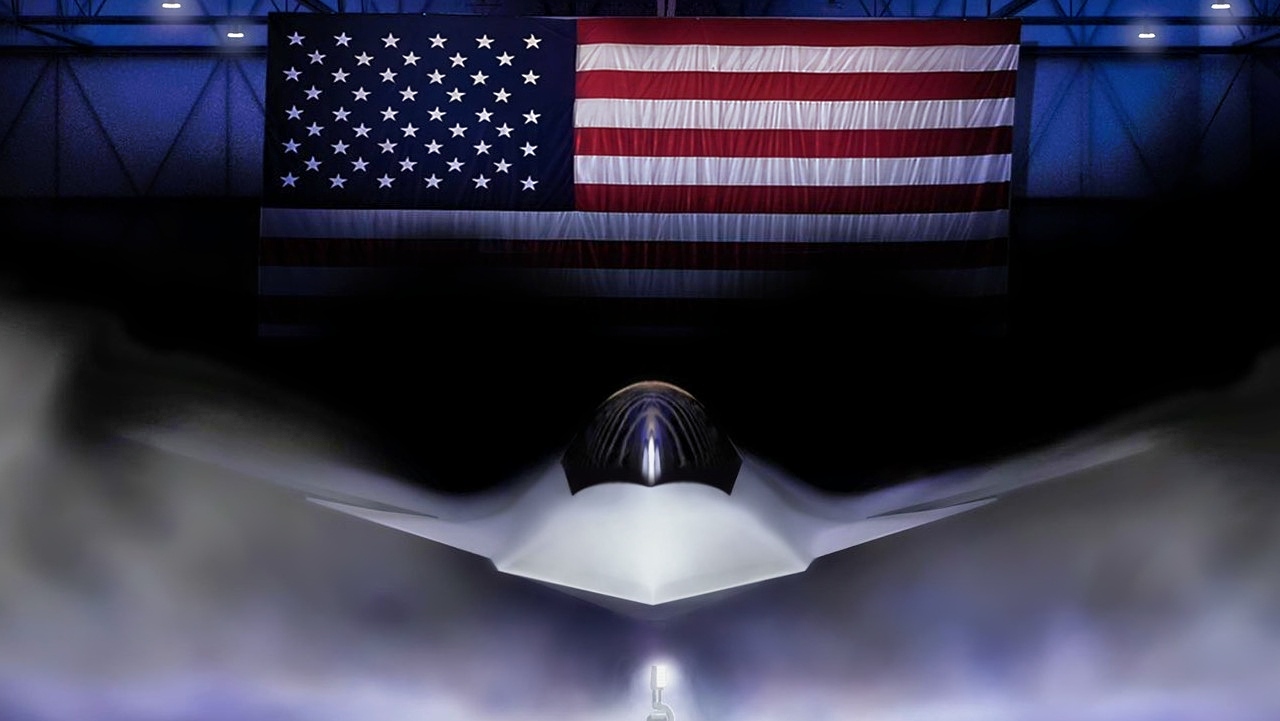
F-47 Fighter from U.S. Air Force. Image Credit USAF.

NGAD F-47 Fighter. Image Credit: Creative Commons.
The F-47 will also be ultra-stealthy and could have drone quarterbacking capability when overseeing a Loyal Wingman set of drones known as the Collaborative Combat Aircraft (CCAs).
The CCA will fly ahead and launch weapons, conduct reconnaissance, achieve electronic warfare superiority, and collect battle damage assessment data. The CCA has two defense contractors competing for the final award: General Atomics’ YFQ-42A and Anduril’s YFQ-44A.
Boeing Is In the Driver’s Seat
At the time, Roper did not give details about what prototype had flown or which defense contractor had built it.
Now we know that Boeing has received the contract for the F-47. This will replace the F-22 Raptor. The F-47 will have 70 percent better range without refueling than the Raptor.
Boeing hopes the F-47 will be operational by 2029. The Air Force aims to order at least 185 F-47s.
Roper was enthusiastic about the NGAD in 2020. “We’re going after the most complicated systems that have ever been built and checked all the boxes with this digital technology. In fact, [we’ve] not just checked the boxes, [we’ve] demonstrated something that’s truly magical,” he said.
This Is Trump’s Baby
The Pentagon believed it would assign some of the best engineers and designers to the NGAD.
He would not have known that President Donald Trump would take such an interest in the sixth-generation warplane, which the 47th president probably designated as the F-47.
J-36: China Has a 6th-Gen Fighter Flying
China is working feverishly on its sixth-generation program spurred by the F-47 announcement.
One of the aircraft has been deemed the J-36, which will carry the new PL-15 air-to-air missile.
This will have a substantial payload, as the J-36 features large weapons bays and a significant sensor system.

J-36 Fighter. Image Credit: Screenshot from X.

The J-36 is also a twin-seater, allowing two pilots to sit side by side. There is another sixth-generation prototype called the J-50.
Beijing ordered its air force to begin working on a sixth-generation fighter around 2019-2020. During that time frame, Chengdu Aerospace Corporation began conducting wind tunnel experiments on test models. However, the Chinese may not achieve full production and initial operational capacity with their next-generation airplanes until the mid-2030s.
Boeing has its work cut out for it to keep the Americans ahead of the People’s Liberation Army Air Force (PLAAF). The aerospace behemoth may have to scrimp on some of the more advanced features, like hypersonic weapons, and integrate the various capabilities of the CCAs to cut costs. But the U.S. Air Force has high hopes and could produce the large numbers that would spell trouble for China.
If the F-47 is successful, Roper will be given credit for starting the program early. The Air Force must already have ample flight data for research and development. The service branch can use that for advanced testing and evaluation of the NGAD, which can send the program to new heights.
MORE – A 7th Generation Fighter Is Possible
American Enterprise Institute’s Mackenzie Eaglen said in 2020 that early testing of the NGAD will have positive implications for congressional funding, which will be needed badly in the coming years.
“If you can quickly get to something and show progress through product, it just changes the whole dynamic for the Hill,” she said. “[Roper has] got so many headwinds, it seems this would be a likely avenue to show conceptual success for his ideas.”
NGAD or F-47 Will Be a Historic Fighter
In all, the American and Chinese showdown with sixth-generation flight is off to a resounding start. This is an arms race to watch, and National Security Journal will continue to provide in-depth coverage of the F-47 and how it will compare to the J-36 and J-50. The history of the NGAD will harken back to 2020, when defense acquisition pioneers described its early progress. Let’s see if that auspicious start will hatch a stealth warbird that can dominate the skies as advertised.
About the Author: Dr. Brent M. Eastwood
Brent M. Eastwood, PhD is the author of Don’t Turn Your Back On the World: a Conservative Foreign Policy and Humans, Machines, and Data: Future Trends in Warfare plus two other books. Brent was the founder and CEO of a tech firm that predicted world events using artificial intelligence. He served as a legislative fellow for U.S. Senator Tim Scott and advised the senator on defense and foreign policy issues. He has taught at American University, George Washington University, and George Mason University. Brent is a former U.S. Army Infantry officer. He can be followed on X @BMEastwood.
More Military
Russia’s Su-57 Felon Stealth Fighter Is a Waste of Rubles




Pingback: FCAS 6th Generation Fighter Could Be Headed for 'Crash Landing' - National Security Journal
Steve
July 19, 2025 at 2:10 pm
America claims it flew its 6th gen fighter back in 2020. China showed the world it has two 6th gen fighters in the sky. Talk is cheap. Seeing is believing.
Everett
July 20, 2025 at 5:14 pm
Shut up Steve. A putz like you has no understanding of the aerospace industry. The Chinese are producing garbage just like the Soviet Union/Russia did/does.
tt 789
September 21, 2025 at 8:49 pm
This post sheds light on a fascinating aspect of military aviation. The advancements in the NGAD program seem to set a benchmark, and it’s intriguing to consider how this could reshape air superiority. While China’s developments are impressive, it’s clear that the US is not just resting on its laurels. What does everyone think about the implications of having a 6th-generation fighter in service years before others?
Javaburn
November 2, 2025 at 12:40 pm
It’s fascinating to think about the advancements in aerospace technology and how the U.S. has been quietly developing its next-gen capabilities for years. The potential of the NGAD program really raises the stakes in the global defense arena. I wonder how this will influence future military strategies and tactics, especially with rising tensions. Great post!