

Key Points and Summary – After years of recruiting shortfalls, the U.S. Army’s Future Soldier Preparatory Course at Fort Jackson is quietly reshaping how America fills its ranks.
-The program targets would-be recruits who fall short on fitness or test scores and gives them a structured, boot camp–style path to meet standards before basic training.

A U.S. Army M1A3 Abrams tank fires a round during a live fire training exercise at Smardan Training Area, Romania, April 19, 2017. The combined exercise had U.S. and Romanian armored crewmen taking commands from a Romanian commander to prove the cohesion between units in support of Operation Atlantic Resolve, a NATO mission involving the U.S. and its European Allies and partners in a combined effort to promote regional stability and deter aggression in Europe. (U.S. Army photo by Army Pvt. Nicholas Vidro)
-Unlike McNamara’s Vietnam-era Project 100,000—which pushed unqualified troops into combat with poor results—FSPC focuses on real remediation, not gaming the system.
-Early data suggests graduates perform comparably to peers, meaning the Army is expanding its recruiting pool without hollowing out combat effectiveness.
The U.S. Army’s Future Soldier Course Has a Message About ‘Lowering Standards’
In the years following the drawdown of the Wars on Terror, the US military found itself with a problem.
Recruiting and retention lagged behind the Army’s goals, hindering its ability to maintain a cohesive force.
While disinterest on the part of young people was a problem, a bigger issue was that the physical, legal, and intellectual standards used for a recruiting baseline excluded some three-quarters of eligible young Americans.

U.S. Army Training Official U.S. Army Photo.
This left the Department of Defense with a quandary: adjust standards, or change operations to match the reduced flow of recruits.
This was not the first time the military had faced such a problem, but previous instances had occurred under vastly different political and economic circumstances.
While the jury remains out on an overall evaluation of the program, at this point, it appears to be a significant success compared to earlier projects, including Robert McNamara’s Vietnam-era “Project 100000.”
The New U.S. Army Recruiting
The Army designed the Future Soldier Preparatory Course (FSPC) to close two gaps. The first is between the number of soldiers the Army wants and the number it has been able to recruit in recent years.
The second gap was between the aspirations of men and women who wanted to join the Army and the basic physical, intellectual, and legal standards the Army requires of new recruits.
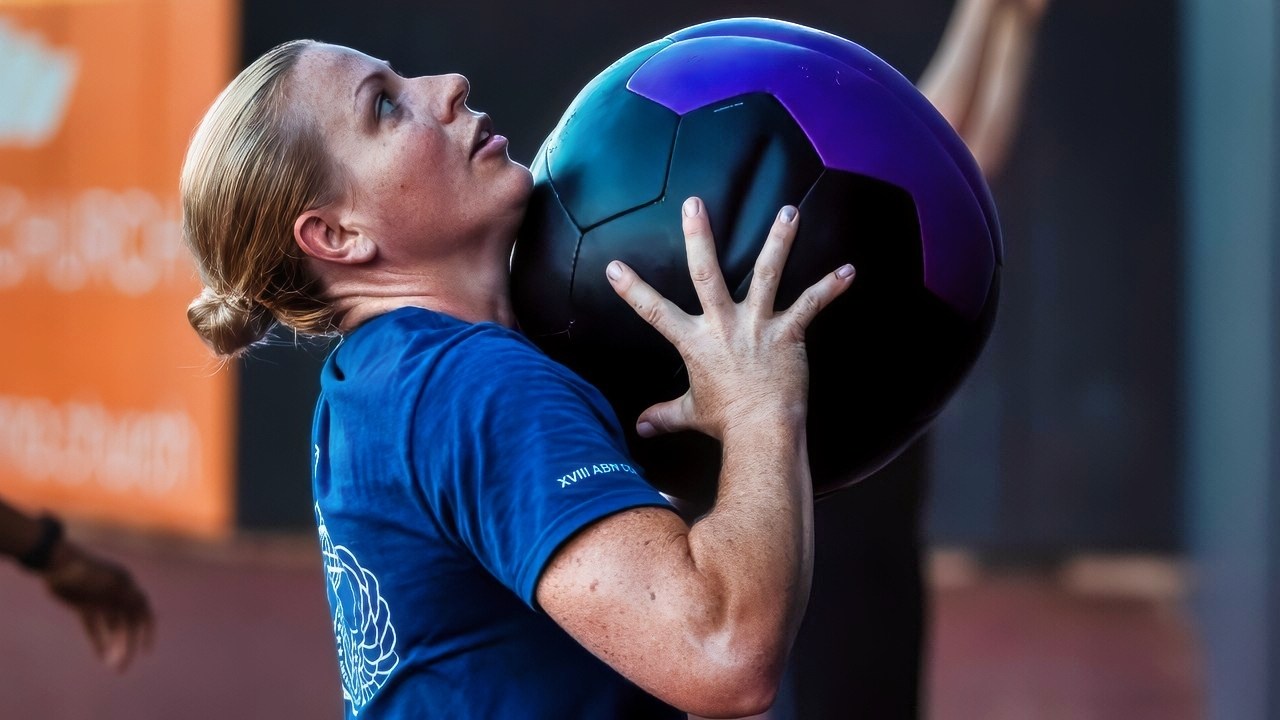
Based in Fort Jackson, South Carolina, the FSPC puts would-be recruits through what amounts to preparatory basic training, designed to generate physical fitness (usually measured in terms of weight, waistline, and basic exercise proficiencies) and improve test scores.

U.S. Army Pvt. 1st Class Ian Wojick, assigned to 552nd Military Police Company, 25th Infantry, aims a DroneBuster, an anti-drone weapon, toward the sky during the Joint Pacific Multinational Readiness Center Exportable (JPMRC-X) exercise at Fort Magsaysay, Philippines, June 1, 2025. This iteration of the JPMRC-X marks the second Combat Training Center (CTC) rotation conducted in the Philippines. As part of the Army’s premier regional CTC, JPMRC-X enables the U.S. Army, joint force, allies, and partners to develop skills in realistic environments and conditions. Through exportable capabilities, JPMRC-X strengthens war-fighting readiness, enhances multilateral relationships, and contributes to regional security and stability in the Indo-Pacific. (U.S. Army photo by Staff Sgt. Keith Thornburgh)
The pilot FSPC (launched in 2022) project achieved enormous success in improving recruit performance before basic training, as measured by both physical and intellectual metrics.
Two expansions of the program since that point have seen similar success, resulting in an observable recruiting surge that President Trump and Secretary of Defense Hegseth have taken credit for. The program has been so successful that the Navy has adopted similar measures to manage its own recruiting shortfalls.
McNamara’s 100000
Because the Future Soldier Preparatory Course involves a creative approach to resolving the tension between high standards and the need to recruit more soldiers, some have compared it to Project 100000, a Vietnam-era program designed to expand Army recruitment to populations that previously had been excluded because of low academic or physical evaluations (in practice, opening up recruiting for candidates who scored in the 10th to 30th percentile on armed forces recruting tests).
Project 100000 was designed in a different time to solve a problem that was in some ways the same but in other ways much different.
The Project resulted from two impulses; the first a need to close the gap in recruitment created by US involvement in the Vietnam War, and second a belief in the power of technology to close gaps in testing and intellectual performance.
Essentially, Secretary of Defense Robert McNamara believed that he could address the Vietnam manpower problem while simultaneously resolving the issue of low-scoring recruits by placing them in front of educational videotapes.
Project 100000 was also justified in terms of supporting Lyndon B. Johnson’s War on Poverty by giving poor Americans the opportunity to take advantage of military service to improve socio-economic outcomes for they and their families.
By nearly every account, Project 100000 failed. Although exact statistics are hard to come by, reports from Vietnam suggested that Project recruits suffered higher casualties and performed at lower levels of effectiveness than “normal” soldiers.
Testing was often fraudulent, with test centers coaching illiterate candidates through their paces. Post-war outcomes were also negative, with veterans of Project 100000 suffering from worse socio-economic outcomes than non-veterans from comparable groups.
In the end, Project 100000 has served to do little more than replace high-scoring potential recruits (many of whom enjoyed college deferments) with low-performing recruits, to the detriment of the latter and of the fighting capacity of the US armed forces.
The Differences
While the need that generated both programs and some of the logic that sustains them is the same, the differences are nevertheless profound.
Most of the problems addressed by the Future Soldier Preparatory Course involve physical fitness, and regularized intellectual testing since the 1960s has become much better at distinguishing between low scores and significant intellectual disability.
McNamara’s folly also came at a much earlier stage in the science of pedagogy and was launched without a complete understanding of the nature of learning.
We now have confidence that the technological tools McNamara wanted to use for academic improvement have little to no impact, and that real improvement requires a social infrastructure geared towards remedial education.
To be sure, the brief period covered by the FSPC is not enough to remedy decades of educational shortfalls, but a better understanding of the problem (often linguistic) brings the ends and the means closer together.
Finally, while graduates of the Future Soldier course usually find themselves in armor, infantry or artillery (traditionally the lowest scoring specialties), there is little evidence thus far that their performance is meaningfully lower than that of other recruits. Project 100000 hurt the combat capacity of American units in Vietnam, and hurt the individuals who made up those units; there is no evidence thus far that FSPC will have the same effect.
The U.S. Army: How Do We Recruit in 2025?
Secretary of Defense Pete Hegseth has argued that an end to “wokeness” and a wave of patriotism spurred by the election of President Trump to a second term is driving recruiting success in the US armed forces.
It’s too early to conclude that the Secretary of Defense is wrong about these claims; President Trump’s election surely matters for many of the demographics (in particular those of the exurban South) that have historically filled out the armed forces.
However, the FSPC program has had a significant impact, one that is readily apparent in the numbers.
About the Author: Dr. Robert Farley
Dr. Robert Farley has taught security and diplomacy courses at the Patterson School since 2005. He received his BS from the University of Oregon in 1997, and his Ph. D. from the University of Washington in 2004. Dr. Farley is the author of Grounded: The Case for Abolishing the United States Air Force (University Press of Kentucky, 2014), the Battleship Book (Wildside, 2016), Patents for Power: Intellectual Property Law and the Diffusion of Military Technology (University of Chicago, 2020), and most recently Waging War with Gold: National Security and the Finance Domain Across the Ages (Lynne Rienner, 2023). He has contributed extensively to a number of journals and magazines, including the National Interest, the Diplomat: APAC, World Politics Review, and the American Prospect. Dr. Farley is also a founder and senior editor of Lawyers, Guns and Money.




Pingback: Making Recruiting Ends Meet - Lawyers, Guns & Money