


Key Points and Summary: The F-35 Fighter’s Big Range Problem
– The F-35 is an extraordinary sensor-shooter and coalition “quarterback,” but its one stubborn limit—unrefueled range—looms large in the vast Indo-Pacific.

A U.S. Marine Corps KC-130J Super Hercules aircraft with Marine Aerial Refueler Transport Squadron (VMGR) 152 refuels an F-35B Lightning II aircraft with Marine Fighter Attack Squadron (VMFA) 121, both assigned to Marine Aircraft Group 12, 1st Marine Aircraft Wing, during exercise Red-Flag Alaska 25, at Joint Base Elmendorf-Richardson, Alaska, July 21, 2025. VMGR-152 partnered with the U.S. Air Force during Red Flag Alaska to enhance aerial refueling and assault support capabilities. Training in Alaska’s harsh environment sharpened the squadron’s combat readiness and lethality. (U.S. Marine Corps photo Lance Cpl. Cecilia Campbell)
-China’s massed missiles can close runways and push tankers back, shrinking fighters’ effective reach. Tanker upgrades and the Navy’s MQ-25 drone help, but they don’t erase the vulnerability.
-The fix is strategic, not cosmetic: design the Navy’s F/A-XX and the Air Force’s next fighter (often dubbed “F-47”) around 1,000-plus-nautical-mile combat radii, then team them with uncrewed aircraft and standoff weapons.
-Keep buying and improving F-35s—but pair them with platforms built for Pacific distances and more resilient logistics.
The F-35’s One Big Limitation Is Range (And Why The Next Generation Must Fix It)
The F-35 is, by any practical measure, the most capable combat aircraft flying today. It can see first, shoot first, and make every other platform around it more lethal by sharing what it sees. But there’s one stubborn constraint that even its fans (count me among them) have to acknowledge: unrefueled range. In a world where China can hold air bases and tankers at risk across the Western Pacific, the distance an aircraft can fly before it needs a drink isn’t a detail. It’s the ballgame.
Below, I’ll lay out why range matters so much in the Indo-Pacific, what the F-35 can and can’t do on internal fuel, how stopgaps like tanker drones help but don’t solve the problem, and what the Navy’s F/A-XX and the Air Force’s next fighter—call it “F-47” as shorthand—must deliver to fix it.

Shown is a graphical artist rendering of the Next Generation Air Dominance (NGAD) Platform. The rendering highlights the Air Force’s sixth generation fighter, the F-47. The NGAD Platform will bring lethal, next-generation technologies to ensure air superiority for the Joint Force in any conflict. (U.S. Air Force graphic)
Why Range Matters In The Indo-Pacific
Geography is destiny. In Europe or the Middle East, a fighter can often launch from close, hardened bases, spend meaningful time on station, and still return with fuel to spare. The Pacific is different: vast stretches of water, long legs between bases, and potential targets hundreds of nautical miles from the nearest friendly runway.
Make that harder still with missiles. China has built a massive inventory of land-based ballistic and cruise missiles designed to crater runways, push carriers back, and force U.S. tankers to loiter far from the fight. That combination isn’t theoretical; non-partisan studies and Pentagon-linked analyses have been warning that forward bases and predictable tanker tracks are vulnerable. If runways are closed or tankers have to stand off, the practical reach of a fighter shrinks—sometimes dramatically. That is the context in which we should judge the F-35’s otherwise stellar performance.
What The Numbers Actually Say
On internal fuel and a typical strike profile, official materials peg the F-35A’s combat radius at roughly 590 nautical miles, the F-35B’s in the ~450 nm ballpark, and the F-35C (the carrier variant) just over 600 nm. Those are respectable figures for a stealth, single-engine jet hauling a lot of gas inside a low-observable airframe. But when you place the notional target set beyond the first island chain—or push carriers outside the envelope of China’s long-range anti-ship weapons—those numbers quickly collide with reality: you either need aerial refueling or you accept less time on station.
Could you bolt on external tanks? You can, but you immediately give up some stealth and create drag—fine for ferry flights, less fine when the other side has modern sensors and long-range missiles. The F-35’s genius is its “clean” internal configuration. The tradeoff is that its internal bays and internal gas define the baseline radius.
The Tanker Fix—Helpful, But A Fragile Link
The U.S. Air Force’s KC-46 Pegasus is steadily replacing aging tankers and brings better survivability features and connectivity. The Navy’s MQ-25 Stingray—an unmanned tanker launched from carriers—will also extend the carrier air wing’s reach by pushing fuel forward.

The first KC-46A Pegasus lands at Seymour Johnson Air Force Base, North Carolina, June 12, 2020. The KC-46A Pegasus is a widebody, multirole tanker that can refuel all U.S., allied and coalition military aircraft compatible with international aerial refueling procedures. (U.S. Air Force photo by Senior Airman Jacob B. Derry)
Both are real improvements. But both depend on a like-clockwork refueling plan that assumes tankers can operate close enough to the fight without being harassed by long-range missiles, fighters, or drones.
That’s a big assumption in a conflict against a peer. You can push tankers farther back, but every mile the refueling track moves away shortens the effective reach of the fighters dependent on it. In other words, tankers ease the range problem; they don’t erase it.
Why Range Becomes Strategy, Not Just Specification
Range buys choices. Longer unrefueled legs let you:
Launch from bases the enemy can’t easily close, or from carriers kept farther outside anti-ship missile envelopes.
Spend more time on station (the “persistence” every commander wants) instead of burning cycles commuting to and from tankers.
Select safer refueling points (or refuel less often), thereby trimming the threat to the tanker fleet that is the oxygen of a modern air campaign.
When you zoom out, range is really a resilience play. It makes every other part of the kill chain—sensors, shooters, command-and-control—harder for the adversary to disrupt.
What The Navy’s F/A-XX Must Deliver
The Navy has telegraphed for years what its next crewed fighter must prioritize: more range and persistence than today’s Super Hornets and F-35Cs, plus the stealth and sensors to survive in contested airspace.

Boeing NGAD F/A-XX Fighter Rendering. Image Credit: Boeing.
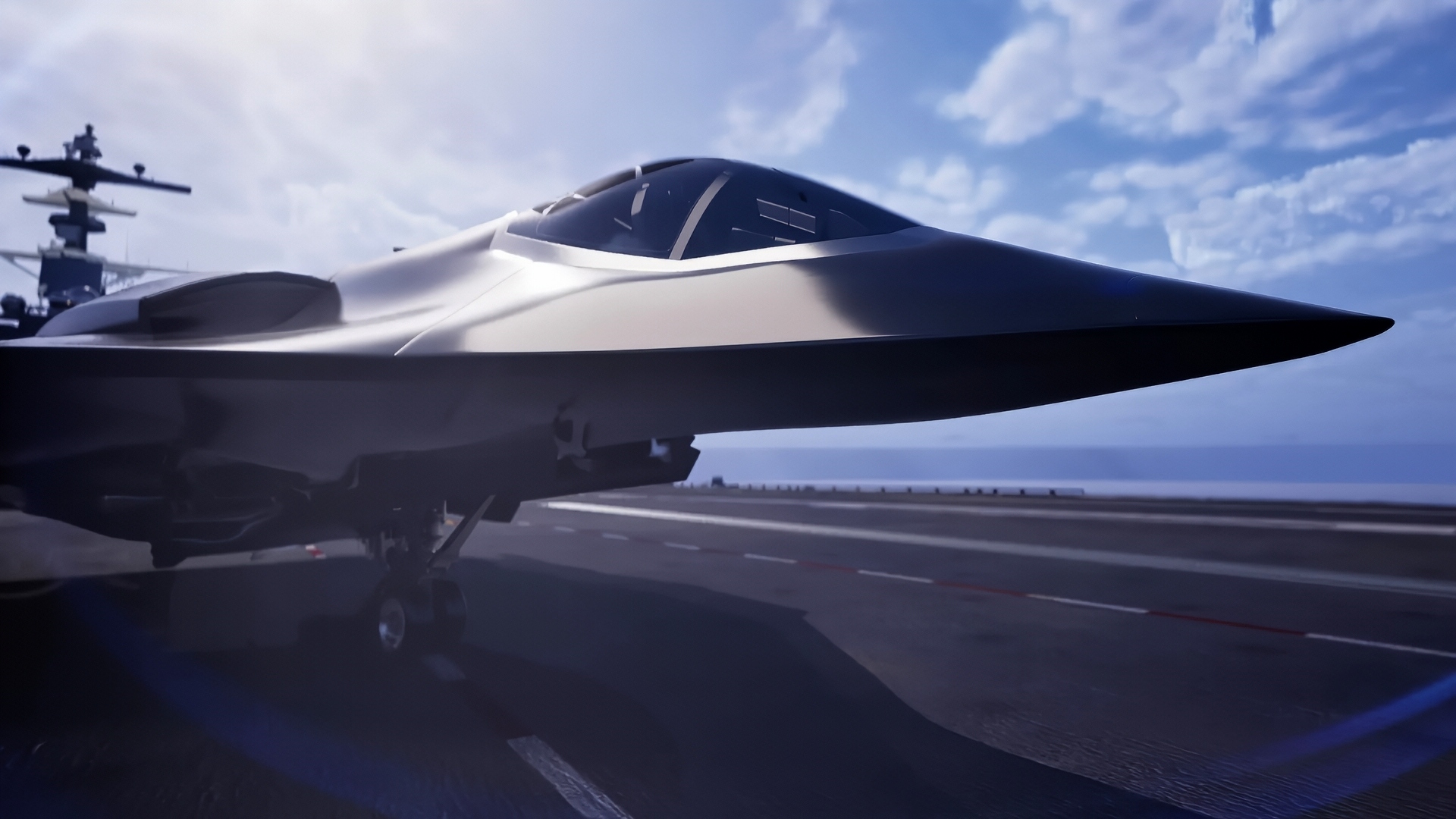
F/A-XX Handout Photo from Northrop Grumman.
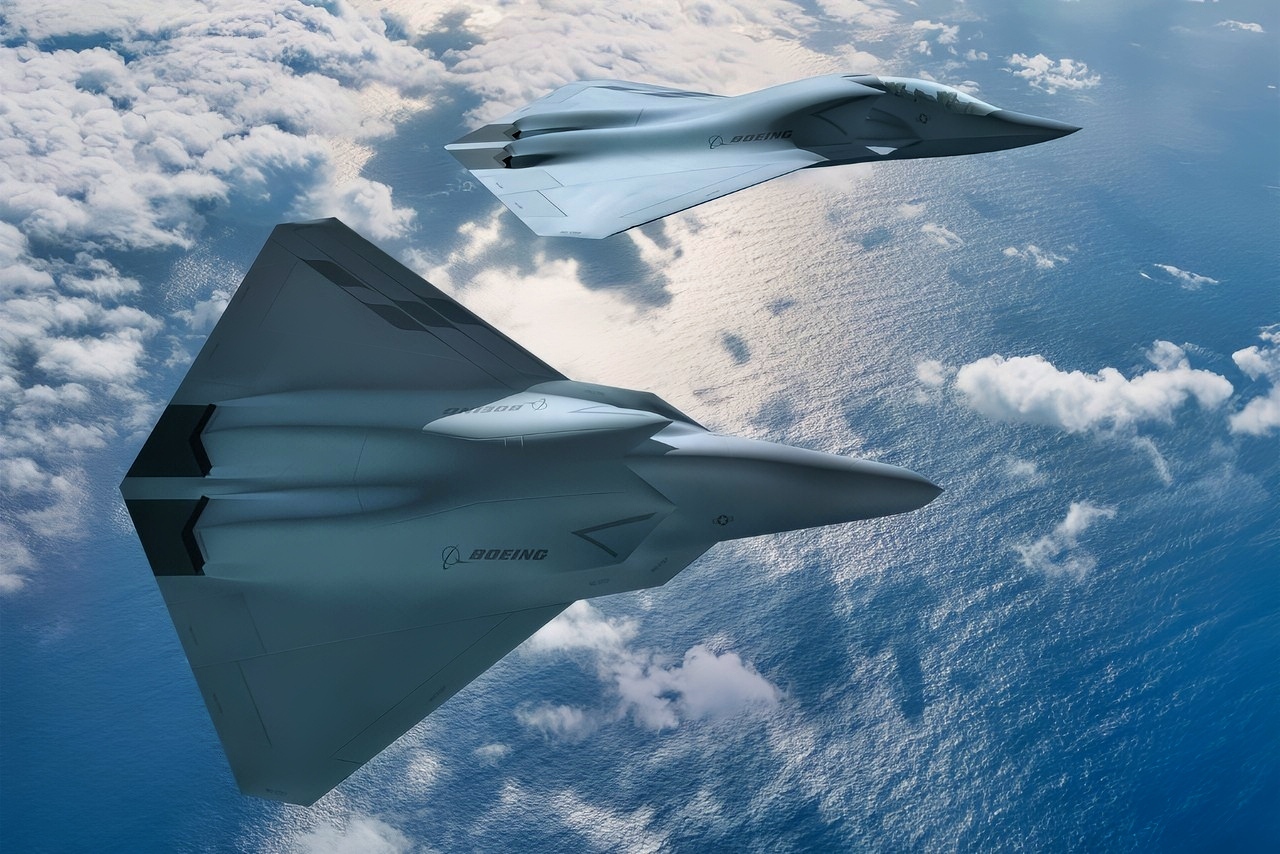
F/A-XX Fighter from Boeing. Image Credit: Boeing.
Open reporting has repeatedly described a design goal on the order of a 25% or greater increase in combat radius over current carrier fighters. Depending on the final configuration, that puts the target north of ~750 nm unrefueled for a strike profile—enough to give a carrier real maneuver room against long-range anti-ship ballistic missiles while keeping the air wing relevant.
F/A-XX also won’t fly alone. It’s expected to “quarterback” a mix of uncrewed aircraft—some carrying sensors, some carrying weapons, some even carrying gas. That human-machine team doesn’t replace range in the pilot’s jet; it augments it. The most elegant solution is both: a much longer-legged crewed fighter with a loyal constellation of drones that extend its eyes, its punch, and its endurance.
What A Future “F-47” Should Bring To The Fight
On the Air Force side, public reporting this year suggests the service’s next crewed air-dominance jet aims for a 1,000-plus-nautical-mile combat radius. That’s a big step beyond the F-35A and even the F-22, and it’s exactly the kind of design choice the Pacific theater demands. However, the final designation shakes out, the logic is clear: the next fighter must be able to launch from farther away, stay longer, and come home without relying on a vulnerable tanker plan.

A U.S. Air Force F-35A Lightning II assigned to the 60th Fighter Squadron, flies overhead after conducting a live weapons drop at Camp Shelby, Miss., Oct 25, 2023. During the exercise, pilots tested various munitions including the GBU-12s, GBU-31v1s, and 362 rounds of 25mm Training Munitions from the gun.
Two features will matter most. First, a big, efficient airframe built from the outset for volume—internal fuel, internal weapons, and generous apertures for sensors—while still meeting stringent stealth requirements. Second, smart propulsion and thermal management that keep signature, fuel burn, and heat under control at cruise, not just in a dash. If the Air Force nails those, it lowers the range tax on every mission.
The “Range By Other Means” Toolkit
While we wait for the next generation, the U.S. is already stretching the F-35’s practical reach in three ways:
Standoff Weapons. Integrating long-range missiles (think JASSM-ER for land attack and LRASM for ships) lets the F-35 strike from well outside dense defenses. The catch is physics: big standoff weapons take volume. You’ll sometimes carry them externally—acceptable for certain shots, but not when maximum stealth is required.

JASSM Missile National Security Journal Photo

JASSM ‘Stealth’ Cruise Missile. Image Taken by National Security Journal at the U.S. Air Force Museum on 7/19/2025.
Better Tanker Concepts. The KC-46 is more survivable than legacy gas stations, and the Navy’s MQ-25 can push fuel forward from the sea. Future stealthy tankers are being studied to keep the gas flowing even when the threat is hot.
Distributed Basing. Agile Combat Employment (ACE) and other concepts disperse fighters across many smaller fields so no single runway closure ends the sortie flow. It’s a sound idea, but dispersion multiplies the demand for fuel trucks, spare parts, and, yes, more tanker sorties. Logistics always gets a vote.
The F-35 Is A Phenomenal “Quarterback.” The Playbook Still Needs Yardage
The F-35 fuses data from a vast number of sensors, cleans it up, and shares it with all parties that need it—other fighters, ships, and ground units. In that sense, it’s less “just a fighter” and more of an airborne battle manager with talons.
But being the best quarterback in the league doesn’t help you much if the field itself is too big. In the Pacific, the field is enormous. The F-35 will remain indispensable, but it needs help from platforms that can fly farther without the tanker umbilical.
What This Means For China Scenarios
Consider a crisis over Taiwan or the South China Sea. China’s first move would likely be a salvo designed to crater runways and scare tankers away from forward tracks. In that environment, fighters with longer legs can still make on-time intercepts, still escort bombers and drones into the contested zone, and still cover the long ride home. They also give planners more flexibility to base from Guam, Australia, or ad-hoc fields that are well outside the most dangerous missile envelopes. That is why range isn’t a “nice to have”—it is the difference between a fair fight and a coin toss.
Don’t Confuse “Range” With “Bigger = Worse”
There’s a reflex to assume that more range means a flying gas tank that can’t maneuver. That was true decades ago. It’s not a law of nature. With modern aerodynamics, signature control, and efficient engines, you can build a fighter that has reach and teeth. The Air Force’s next jet and the Navy’s F/A-XX don’t have to be bombers in disguise; they have to be survivable fighters that finally match the theater they’re meant to dominate.
A Realistic Path Forward
Here’s the pragmatic recipe:
Keep buying and improving F-35s. Its “quarterbacking” value only grows as more allied squadrons field it and as new weapons arrive.
Field MQ-25 and upgrade the tanker force. More gas, pushed forward, buys time and options.
Design the next fighters for the Pacific first. Start with a 1,000-nm-plus combat radius and work backward from there.
Marry them to uncrewed teammates. Let autonomous wingmen carry extra sensors, fuel, or weapons to multiply the human pilot’s options.
Harden the logistics web. Without resilient bases and dispersed fuel, even long-legged fighters will struggle.
None of that is cheap. But it’s cheaper than fighting with a force designed for a different map.
Bottom Line on the F-35 Range Challenge
The F-35 remains the best overall fighter on Earth because it sees, decides, and coordinates better than anything else flying.
Its biggest shortcoming—range—doesn’t diminish that truth, but it does shape where and how you use it against a peer.
The answer isn’t to love the jet less; it’s to pair it with platforms that finally match the Pacific’s distances. If the Navy’s F/A-XX and the Air Force’s next fighter (“F-47,” unofficially) deliver the unrefueled reach their advocates describe, the U.S. won’t just keep up in the Western Pacific. It will set the pace again.
About the Author: Harry J. Kazianis
Harry J. Kazianis (@Grecianformula) is Editor-In-Chief and President of National Security Journal. He was the former Senior Director of National Security Affairs at the Center for the National Interest (CFTNI), a foreign policy think tank founded by Richard Nixon based in Washington, DC. Harry has over a decade of experience in think tanks and national security publishing. His ideas have been published in the NY Times, The Washington Post, The Wall Street Journal, CNN, and many other outlets worldwide. He has held positions at CSIS, the Heritage Foundation, the University of Nottingham, and several other institutions related to national security research and studies. He is the former Executive Editor of the National Interest and the Diplomat. He holds a Master’s degree focusing on international affairs from Harvard University.
More Military
The B-1B Lancer Bomber Almost Never Flew
Battleship USS Nevada Has a Message for the U.S. Navy
Forget Aircraft Carriers: ‘Light Aircraft Carriers’ Armed with Drones Might Be the Future
The Marine Corps San Antonio-Class Amphibious Ships are ‘Sitting Ducks’‘
It Can Outrun Everything’: The SR-71 Blackbird Mach 3 Spy Plane Had 1 Job