

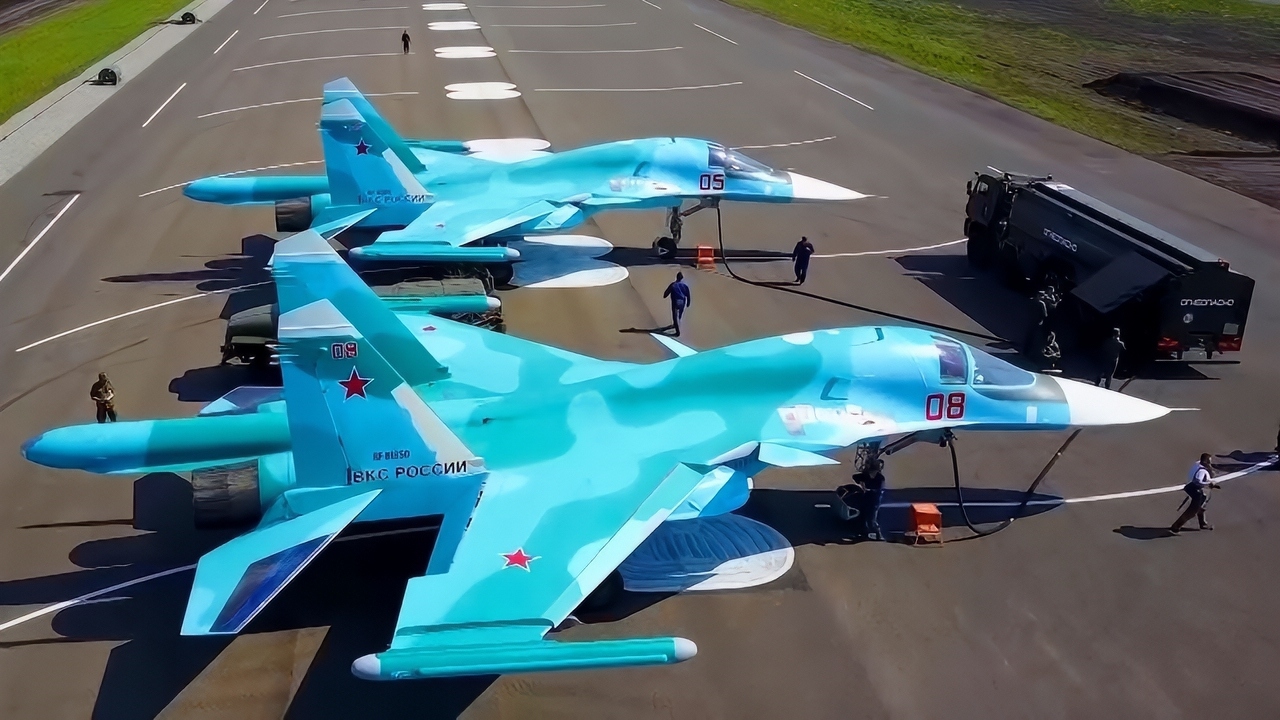
Key Points and Summary – Belarus granted rare access to U.S., Turkish and Hungarian defense attachés to observe Zapad-25 near Barysaw, part of drills held Sept. 12–16 in Belarus and Russia.
-Defense Minister Viktor Khrenin touted “openness,” while 21 nations, including China, were invited.
-The exercise—smaller and farther from NATO borders than 2021—still alarmed Poland and the Baltic states; Warsaw closed border crossings and restricted low-level flights.
-The visit coincided with Minsk freeing 52 prisoners after talks led by U.S. envoy John Coale, with Washington easing Belavia sanctions for Boeing spares.
-Analysts say Moscow uses Zapad to intimidate neighbors and undercut Europe’s security order.
U.S. Defense Attaches Get Rare Access to Belarus-Russia ‘Zapad-25’ Drills
WARSAW, POLAND – In an unusual move, the nation of Belarus, which is one of Russian President Vladimir Putin’s staunchest allies, has permitted defense attaches and representatives from three NATO member states — the United States, Turkey, and Hungary — to attend and observe the Zapad-25 military exercise.
Military intelligence officers from the three NATO member-states were seen at a training ground near Barysaw, which is located roughly 46 miles northeast of the capital Minsk.
The news that U.S. military personnel were given access to the Zapad-25 operation on Sept. 15 was announced by the Belarus Ministry of Defense. “We will show whatever is of interest for you. Whatever you want. You can go there and see, talk to people,” said Belarusian Defense Minister Viktor Khrenin.
The Zapad drills ran from Sept.12-16 in Belarus and the western regions of Russia. It is not known whether NATO representatives were given access to units involved in exercises on Russian territory.
This year’s Zapad exercise has created a high level of concern among NATO’s eastern-flank and Baltic-region members, in particular Poland, Lithuania, Estonia, and Latvia. Some 21 different nations were invited to send their representatives as observers. Among these were military officers from China’s People’s Liberation Army.
“It is hard to imagine such openness that we demonstrate and ensure in this exercise,” Khrenin added. “The main reason is that we have nothing to hide.”
Washington’s Longer-Term Plan
The attendance by U.S. military officers is just the latest significant sign that the Trump administration is interested in re-engaging and restoring ties with President Aleksandr Lukashenko’s government in Minsk. A few days prior to the exercise, the Belarusian government released 52 political prisoners — the second such gesture by Lukashenko in recent months.
Those released included opposition figures, journalists, and foreign nationals. They were freed after discussions with a U.S. special delegation led by Presidential Special Envoy John Coale, an American lawyer with long-time ties to U.S. President Donald Trump.
The quid pro quo for Coale being permitted to take these hostages out of Belarus was revealed after his meeting with the Belarusian dictator. Trump’s envoy announced that Washington would lift sanctions previously imposed on Belavia, Belarus’s state airline. The lifting of those restrictions will permit Belarus to once again purchase spare parts for the airline’s Boeing aircraft.
Zapad and NATO
The Zapad drills have been held every four years since the late 1970s but were suspended for a decade from 1999-2009. They are officially characterized as defensive in nature, but they have always created tensions in Europe, especially with nations close to Russia’s borders.
The 2025 edition of the exercise has been significantly reduced, in size and in number of personnel, compared with the previous version in 2021. The activity has also been taking place farther than before from any borders with NATO.
Poland closed all of its border crossings with Belarus for the duration of the exercise and has banned low-level commercial and private civil aircraft in the border areas until Dec. 9. Despite protestations by Moscow that the Zapad training drills show no signs of preparation for offensive military operations, Western governments maintain Putin uses them to intimidate and pressure his neighbors.
Among the nations who charge Putin with employing the Zapad “training” maneuvers as a foreign policy tool and an attempt to show its neighbors its military prowess is Poland. Polish military news site Defence24 this week published an op-ed stating:
“This approach is reflected in the Zapad-25 (West) military exercises currently taking place once again on NATO’s eastern flank. It can also be observed in the context of Russia’s almost 360-degree political and military influence.
“It is manifested in the desire to demonstrate the strength of relations with the PRC (for example, Wostok), and to show the ability to support countries outside Europe and Asia through exercises with, for instance, South Africa, and in selling Russian weapons to various countries of the so-called Third World. At the same time, the Zapad maneuvers are a priority because they are directly and almost openly integrated into undermining the European security architecture.”
Lukashenko himself is another post-Soviet president-for-life who has ruled Belarus since 1994. Western governments maintain sanctions on his regime for – among other transgressions – human rights violations, political murder, and permitting Russian forces to use his territory as a launching pad for the February 2022 invasion of Ukraine.
About the Author: Reuben F. Johnson
Reuben F. Johnson has thirty-six years of experience analyzing and reporting on foreign weapons systems, defense technologies, and international arms export policy. Johnson is the Director of Research at the Casimir Pulaski Foundation. He is also a survivor of the Russian invasion of Ukraine in February 2022. He worked for years in the American defense industry as a foreign technology analyst and later as a consultant for the U.S. Department of Defense, the Departments of the Navy and Air Force, and the governments of the United Kingdom and Australia. In 2022-2023, he won two awards in a row for his defense reporting. He holds a bachelor’s degree from DePauw University and a master’s degree from Miami University in Ohio, specializing in Soviet and Russian studies. He lives in Warsaw.
More Military
Russia’s Oscar-Class Submarine Summed Up in 4 Words
688I: The U.S. Navy’s Best Attack Submarine?
Russia’s T-72 Tank Is So Obsolete