
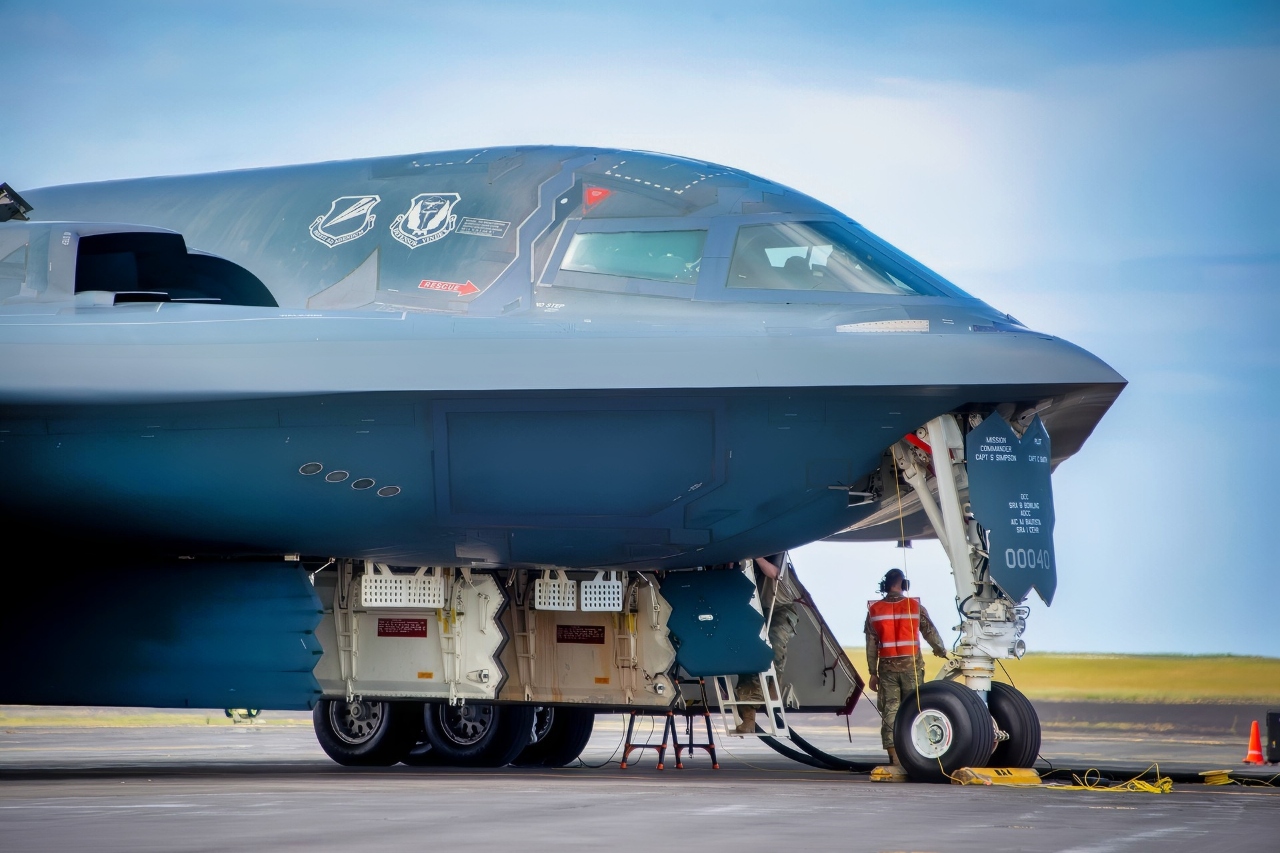
Key Points and Summary – The Trump administration has dismissed Iran’s demands for compensation for damages to its nuclear sites during June’s “Operation Midnight Hammer” as “ridiculous.”
-This sharp rejection creates a new diplomatic impasse, as Iran has made compensation a precondition for new nuclear talks.
-The standoff is intensifying as an end-of-August deadline, set by Secretary of State Marco Rubio, approaches.
-Iran must agree to a new, stringent nuclear deal by then or face the automatic reinstatement of severe pre-2015 sanctions, making a peaceful resolution increasingly difficult.
The Iran Crisis Isn’t Over…
Washington has dismissed demands by Tehran to provide compensation for damage caused to its nuclear infrastructure during June’s Operation Midnight Hammer, describing comments made by Iranian Foreign Minister Abbas Araghchi as “ridiculous.”
Principal Deputy Spokesperson Tommy Pigott told a press briefing on Thursday that Iran would not receive compensation while doubling down on demands that Iran cease all nuclear activity.
“Any demands for financial compensation from the United States to the Iranian regime are ridiculous,” Pigott said. “If the Iranian regime really wanted to save money, they would stop funding terrorist death squads, stop oppressing their own people, and stop wasting money on a nuclear program that isolates them further.”
Pigott also said that the United States remains open to diplomacy with Iran – a message that Tehran has also publicly reiterated via multiple diplomatic channels.
Both sides, however, have described red lines that would make diplomacy difficult or impossible to facilitate. While the United States continues to demand that Iran agree to a new, stringent nuclear deal that ends uranium enrichment entirely, Iranian leadership has described its nuclear program as a matter of national pride that will not be abandoned under external pressure.
Additionally, Araghchi has called for the United States to offer “confidence-building measures” to facilitate a new deal. U.S. Secretary of State Marco Rubio, however, has already issued an ultimatum: Iran must agree to a new nuclear agreement and express intent to end its nuclear program by the end of August or face the reinstatement of pre-2015 sanctions.
This Was Always Going To Happen
When Araghchi told The Financial Times last week that nuclear negotiations would only move forward if Washington agrees to compensate Tehran for damage caused to its nuclear sites, it wasn’t entirely clear what the country’s leadership expected from the United States.
No specific monetary figure was cited by Araghchi, nor were any potential concessions within a future nuclear agreement explicitly outlined. Instead, the Iranian official articulated three broad demands: first, compensation for the damage caused during the June operation; second, a formal explanation from Washington for why the strike was carried out in the midst of an ongoing negotiation; and third, assurance that similar actions would not be repeated.
What was always clear, however, was that President Donald Trump had no intention of following in the footsteps of former President Barack Obama, who authorized a $1.7 billion cash transfer to Iran as part of a settlement over a decades-old dispute.
Trump was famously critical of Obama’s Joint Comprehensive Plan of Action (JCPOA) throughout all three of his presidential campaigns, and was always unlikely to entertain a similar gesture – even if Tehran viewed the recent B-2 attacks as an opportunity for a second payout from the United States.
About the Author:
Jack Buckby is a British author, counter-extremism researcher, and journalist based in New York. Reporting on the U.K., Europe, and the U.S., he works to analyze and understand left-wing and right-wing radicalization, and reports on Western governments’ approaches to the pressing issues of today. His books and research papers explore these themes and propose pragmatic solutions to our increasingly polarized society. His latest book is The Truth Teller: RFK Jr. and the Case for a Post-Partisan Presidency.
More Military
Su-57 vs. J-20 Fighter: Who Wins?