


Key Points and Summary – Ukraine launched overnight strikes against Russian military, industrial, and energy targets, with blasts at an ammo site in occupied Luhansk and fires at oil facilities in Kstovo and a petrochemical plant in Sterlitamak.
-Regional leaders reported damaged substations in Volgograd and Kursk, leaving thousands without power.
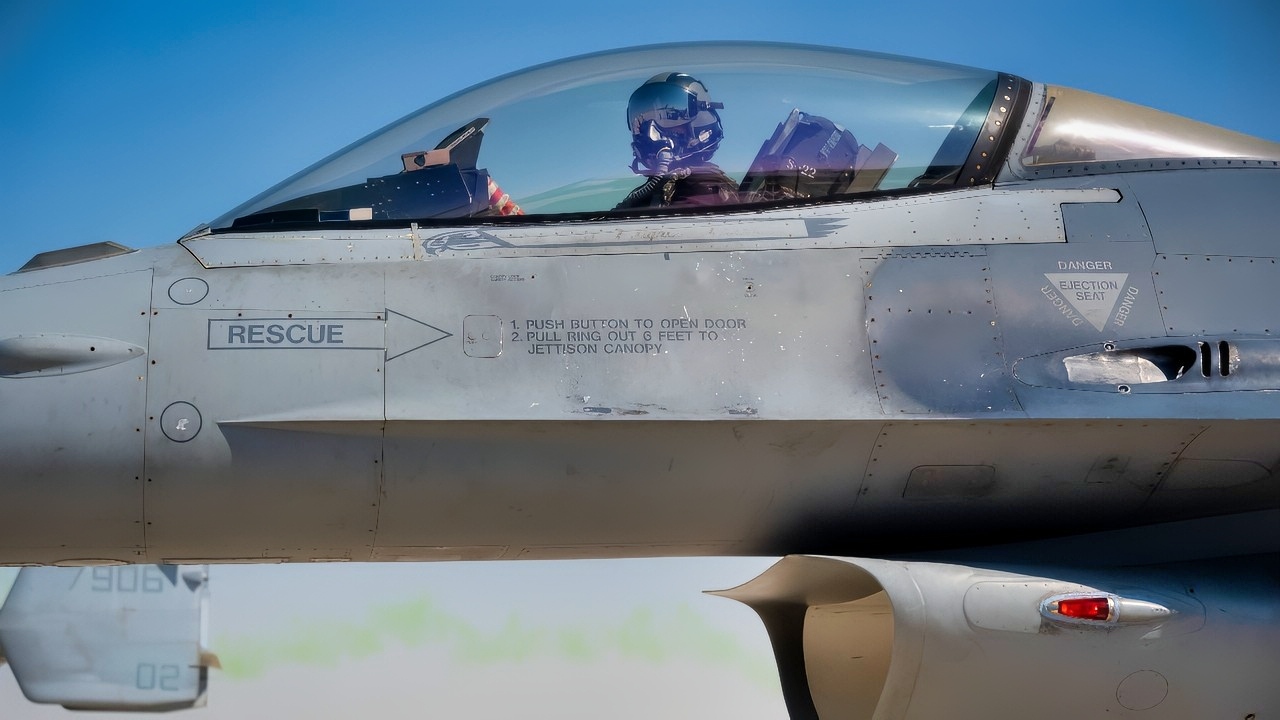
U.S. Air Force Maj. Josiah “Sirius” Gaffney, Pacific Air Forces Demonstration Team commander, prepares to fly a practice sortie before the Dubai Airshow in Dubai, United Arab Emirates, Nov. 11, 2021. In addition to the PACAF F-16 Demonstration Team routine, the air show will highlight a variety of U.S. Air Force, Navy and Marine Corps aircraft showcasing the range of U.S. military airpower capabilities. (U.S. Air Force photo by Staff Sgt. Matthew Kakaris)
-Moscow said air defenses downed 85 drones across multiple oblasts.
-The attacks mirror Russia’s renewed winter campaign on Ukraine’s grid, aiming to strain morale and logistics.
-With refineries and depots declared “legitimate” by Kyiv, both sides are shifting to deep interdiction as colder months raise the stakes for energy resilience and supply lines.
Ukraine Hits Multiple Russian Military, Industrial, and Energy Facilities
WARSAW, POLAND – Overnight on November 4, Ukraine and international media organizations reported explosions that rocked a Russian armed forces’ ammunition facility located in the occupied Luhansk Oblast. Explosions were also reported at a petrochemical plant and several oil enterprises across Russia.
In Moscow, the Russian Defense Ministry claimed to have shot down 85 drones in these overnight attacks. What were presumed to be Ukrainian drones were brought down in the Voronezh, Nizhny Novgorod, Belgorod, Kursk, Lipetsk, Volgograd, and Sverdlovsk oblasts, and in the Republic of Bashkortostan as well.
Explosions related to the ammunition facility were reported during a drone attack on the site, located in the city of Dovzhansk in the Luhansk Oblast. The city is located about 50 miles southeast of the city of Luhansk proper and has been under occupation by the Russian forces since Moscow invaded the Donbas in 2014.
The petrochemical plant blasts reportedly took place in Sterlitamak, a city located in Russia’s Republic of Bashkortostan. The city’s Mayor, Emil Shaimardanov, announced on November 4 that part of the city’s water treatment plant had collapsed due to the explosion.
“All emergency services are currently at the scene. The cause of the explosion is being investigated,” he said. Five people were reportedly working at the water treatment facility, but no casualties or injured personnel were reported among them.
Ukraine Attacks Across All of Russia
Other Explosions in the Russian city of Lipetsk were reported by independent media outlets as the trivoga (Ukrainian term for air raid siren) was blaring. The Lipetsk Air Base is situated approximately 7 miles from the city and serves as the main pilot training center of the Russian Aerospace Forces (VKS). It is regarded as the functional equivalent of the US Nellis Air Force Base in Southern Nevada.
According to the independent media outlet Astra, explosions also occurred in the Russian city of Kstovo in the Nizhny Novgorod Oblast, which corroborated reports that had been posted online by local residents. Two oil refineries in Kstovo, the IBUR Kstovo and Lukoil Nizhegorodnefteorgsintez facilities, also reportedly caught on fire during this attack.
An attack in which Ukrainian drones had also targeted the Lukoil Nizhegorodnefteorgsintez oil refinery was also reported on local Telegram channels. Explosions from the drones’ warheads resulted in a large fire at the refined oil products facility.
As with so many of the other attacks by Ukraine’s drone force on Moscow’s oil industry, video footage was soon being posted online that showed multiple fires burning at this facility. Local Russian television and monitoring services all pointed to the oil refinery as the most likely target of this attack.
Power Generation Targeted
As the calendar begins to move into the coldest part of the year, millions of Ukrainians are bracing themselves for another winter of power cuts and possibly even blackouts. Russia is once again conducting a campaign of attacks on Ukraine’s energy grid.
Analysts and officials say that this year, Moscow has shifted tactics, targeting specific regions and gas infrastructure. The idea is to ensure that the regions left cold and dark in winter are those where it has the most negative effects on morale.
Ukraine is attempting to respond in kind, as seen in the past two days, in Russia’s Volgograd Oblast, among other regions. An electrical substation was damaged due to falling drone debris, according to the region’s Governor, Andrey Bocharov.
During another nighttime raid, Alexander Khinshtein, the Governor of Kursk region, reported that a substation in the city of Rylsk had been attacked. More than 16,000 residents in several different areas were left without power.
Several days before, on October 30, a fire broke out at a thermal power plant in the Russian-occupied Luhansk Oblast. This resulted in a widespread power outage across the region, which was also reported by the independent outlet Astra.
Reports could not be immediately confirmed regarding the details of any of these attacks.
Ukraine’s government has said on multiple occasions that it considers Russia’s oil refineries to be legitimate military targets, on the grounds that profits from the fossil fuel industry fund Moscow’s military and defense production.
Ukraine’s military regularly strikes military targets in its occupied territories and deep within Russia as well. These are all part of an effort to disrupt Moscow’s ability to supply and sustain its war against Ukraine.
About the Author: Reuben F. Johnson
Reuben F. Johnson has thirty-six years of experience analyzing and reporting on foreign weapons systems, defense technologies, and international arms export policy. Johnson is the Director of the Asia Research Centre at the Casimir Pulaski Foundation. He is also a survivor of the Russian invasion of Ukraine in February 2022. He worked for years in the American defense industry as a foreign technology analyst and later as a consultant for the U.S. Department of Defense, the Departments of the Navy and Air Force, and the governments of the United Kingdom and Australia. In 2022-2023, he won two awards in a row for his defense reporting. He holds a bachelor’s degree from DePauw University and a master’s degree from Miami University in Ohio, specializing in Soviet and Russian studies. He lives in Warsaw.
More Military
Russia’s Submarine Fleet Summed Up Simply in 4 Words
The Air Force Sent A-10 Warthogs to China’s Doorstep
The Air Force’s B-2 Bomber Nightmare Has Arrived
The Navy Tried for 4 Weeks to Sink Their Own Aircraft Carrier