
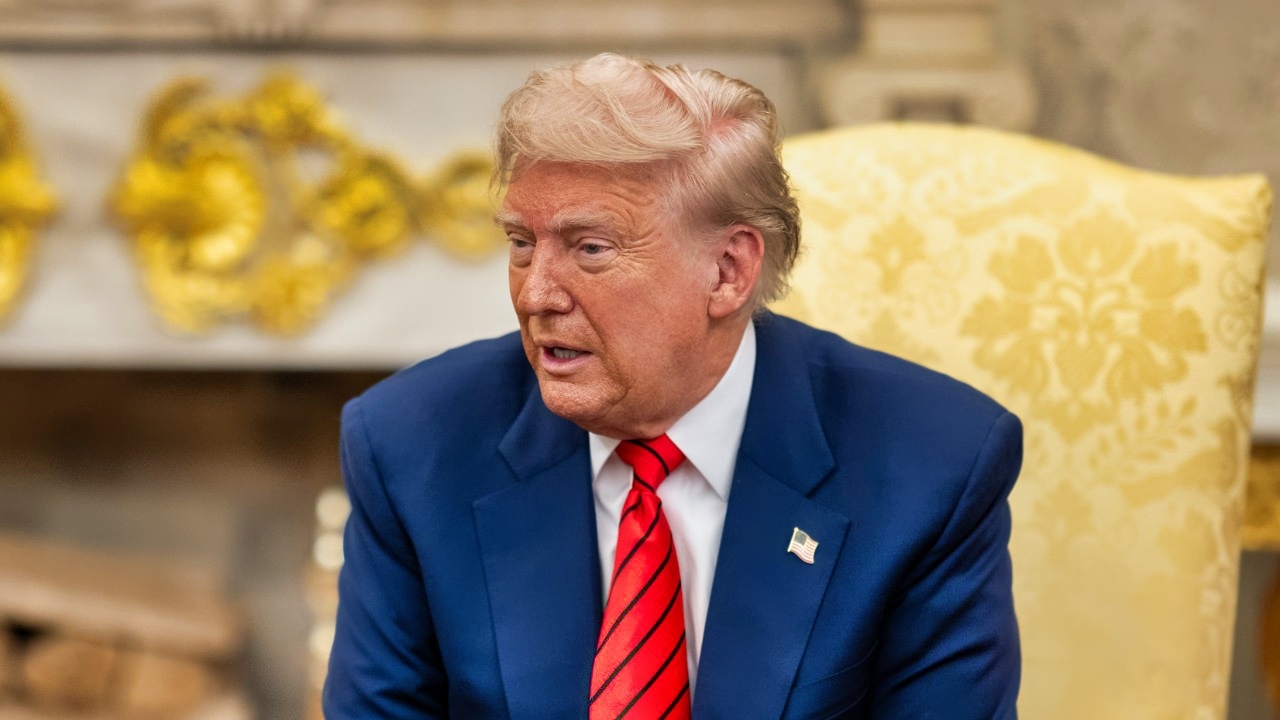
The big picture shows that Donald Trump wants to become America’s first dictator.
His greed, cruelty, and incompetence distort every facet of American life.
Legality? Trump said in an interview on May 4 that he did not know whether every person on American soil is entitled to due process, despite constitutional guarantees, and complained that adhering to that principle would result in an unmanageable slowdown of his mass deportation program.
Asked whether, as president, he needed to “uphold the Constitution of the United States,” Trump responded, “I don’t know”–three months after swearing an oath to do so.
The Department of Justice has taken radical steps to target Trump’s political foes, back a harsh agenda against undocumented immigrants, and help business allies. Pam Bondi is turning the Department of Justice into Trump’s personal law firm, Top experts accuse the Attorney General of placing premium on loyalty to the president.
Trump’s white-collar criminal pardons cost the public more than $1 billion owed by wealthy Americans, says ex-DoJ attorney Liz Oyer. “The president has the power to pardon, which can wipe out your entire sentence including your obligation to pay back the money.”
Trump asks the Supreme Court to allow Elon Musk’s “Department of Government Efficiency” to access the Social Security Agency database.
Human development vs. defense? Trump proposes cutting $163 billion in non-defense spending–for education, health, and climate–and boosting military spending 13%–to over $1 trillion in a “skinny budget.” The president is having a military parade to celebrate the Army’s 250th birthday on 14 June–also his birthday—at an estimated cost of $100 million plus damage to roads.
Security? Photos of a recent cabinet meeting show top White House officials communicating with an even less secure version of the Signal messaging app than was at the center of a huge scandal last month.
Brain power? The Trump administration has ordered the closure of 25 scientific centers that monitor US waters for flooding and drought, and manage supply levels to ensure communities nationwide don’t run out of water.
Trump repeats his legally dubious threat to “take away” Harvard’s tax-exempt status, though federal law prohibits the president from directing or influencing the IRS to investigate or audit an organization.
For Trump, the message is all. So he seeks to defund NPR and PBS.
Freedom of expression? Wisconsin Governor Tony Evers says he’s not afraid. Still, every American should be concerned about “chilling” suggestions from Donald Trump’s top border adviser that Evers could be arrested over guidance he issued to state employees about what to do if confronted by federal immigration agents.
Evers said: We now have a federal government that will threaten or arrest an elected official, or even everyday American citizens who have broken no laws, committed no crimes and done nothing wrong.
Puerto Rico dropped a climate lawsuit after the Department of Justice sued two states over planned litigation against oil companies for their role in the climate crisis.
Pleasing the base vs. reality? Despite plunging opinion polls, the president delivers for those attending a campaign-style rally in Michigan. “He loves us and he’s doing it.” Trump fans’ faith is undimmed by his first 100 days.
In Trump, they trust.
At the same time, pundits and protesters have called it 100 days of trouble. Trump’s most faithful supporters use words such as “amazing”, “fantastic”, and “ecstatic” to describe his presidency.
As Jonathan Freedland writes in The Guardian, Donald Trump faces a problem one hundred days in. He can rage, but he can’t govern. Americans are beginning to worry about their future amid a shrinking economy, warnings of empty shelves, and the president’s failed promises.
The single most significant achievement of those 100 days has been to serve as a warning of the perils of nationalist populism, which is effective in winning votes but disastrous when translated into reality.
About the Author: Dr. Walter Clemens
Walter Clemens is an associate at the Davis Center for Russian and Eurasian Studies, Harvard University, and a professor emeritus of political science at Boston University. He wrote The Republican War on America: Dangers of Trump and Trumpism (2023).