

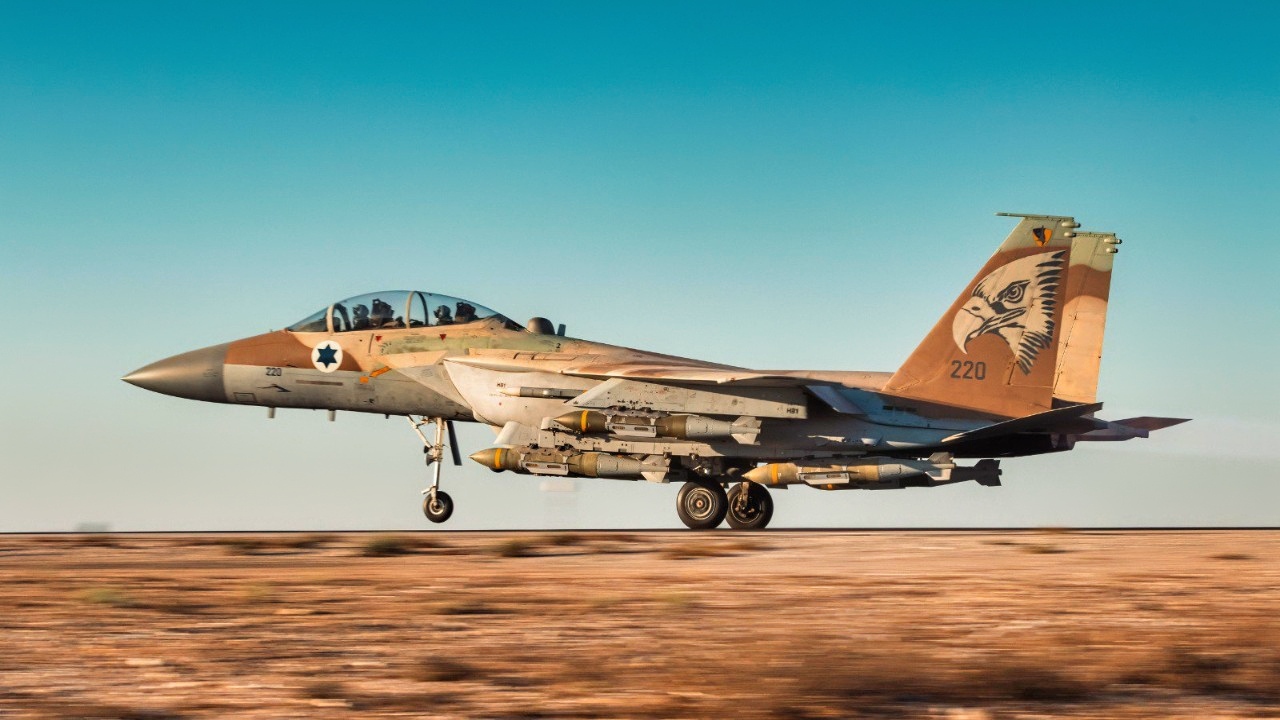
Key Points and Summary – The ceasefire between Iran and Israel might be on the verge of collapse.
-A wave of mysterious fires and explosions is sweeping across Iran, with Iranian officials privately telling newspapers they suspect a coordinated Israeli sabotage campaign.
-While Tehran is hesitant to make public accusations to avoid triggering open retaliation, its new president says the country is “fully prepared” for another war.
-With Israel’s Mossad vowing to continue its operations in Iran, both sides are signaling that the “fragile suspension” of conflict could end at any moment, plunging the region back into war.
Iran and Israel Soon Back at War?
Following their 12-day war in June, Israel and Iran agreed to a ceasefire, which has, for the most part, been held, even as some Israeli politicians have been making noises about the need to attack Iran again.
However, some Iranian officials are now blaming Israel for a series of fires, explosions, and other unusual events. They’re just not doing it publicly, but rather doing so on background to an American newspaper.
According to the New York Times, Iran believes that fires may be part of a “coordinated campaign.”
“For more than two weeks, mysterious explosions and fires have erupted across Iran, setting ablaze apartment complexes and oil refineries, a road outside a major airport and even a shoe factory,” the Times said.
The Iranian government has been reluctant to directly accuse Israel of carrying out the attacks.
Still, privately, government officials see the fires as a possible act of sabotage, possibly carried out by Israel. The Iranian officials interviewed, however, did not provide evidence of sabotage and acknowledged that “gas leaks, garbage fires, and old infrastructure” could be to blame.
In addition, per the newspaper, “a European official who deals with Iran said he had also assessed the attacks as sabotage and suspected Israel of involvement, based on its history in Iran.”
Another War?
The Times added that the Iranian officials are “wary of publicly declaring their suspicions about Israel’s potential involvement because, they said, Iran does not want to corner itself into having to retaliate against Israel.”
Furthermore, Israel’s Mossad has already declared that it intends to continue operating in Iran, even after the ceasefire.
“We will be there, just as we have been up to now,” the spy agency’s director, David Barnea, said after the war, per The Jerusalem Post.
“If anyone thinks we are dealing with linear events that we can predict, they are naïve, We are not even in a cease-fire now; we are in a fragile suspension, and any minute it can end, and we are back at war,” Mahdi Mohammadi, the senior advisor to Iran’s head of Parliament, told the Times.
A Mysterious Death
Meanwhile, there’s the matter of the recent death of Brig. Gen. Gholamhossein Gheybparvar, a deputy commander of the Revolutionary Guards. Per the state media announcement of his death, as cited by the Times, he died of “complications from chemical weapons injuries sustained in Iran’s 1980s war with Iraq.”
However, “many Iranians have questioned” the announced circumstances of Gheybparvar’s death.
Iran Is Ready for Another War with Israel
Meanwhile, in a new interview with Al Jazeera, Iran’s president vowed that his country will not halt uranium enrichment- and that it is ready for another war with Israel if necessary.
President Masoud Pezeshkian said in the interview that he’s “not optimistic” about the ceasefire that followed the June war.
“We are fully prepared for any new Israeli military move, and our armed forces are ready to strike deep inside Israel again,” the president said in the interview.
“We are not very optimistic about it,” he said about the ceasefire. “That is why we have prepared ourselves for any possible scenario and any potential response. Israel has harmed us, and we have also harmed it. It has dealt us powerful blows, and we have struck it hard in its depths, but it is concealing its losses.”
And amid talks with European powers and threats of the return of U.N. sanctions, the Iranian president vowed that the enrichment of uranium will continue.
“Trump says that Iran should not have a nuclear weapon, and we accept this because we reject nuclear weapons and this is our political, religious, humanitarian, and strategic position,” Pezeshkian said. “We believe in diplomacy, so any future negotiations must be according to a win-win logic, and we will not accept threats and dictates.”
As for the question of whether the nuclear program was eliminated, the Iranian leader said that “our nuclear capabilities are in the minds of our scientists and not in the facilities.”
About the Author: Stephen Silver
Stephen Silver is an award-winning journalist, essayist, and film critic, and contributor to the Philadelphia Inquirer, the Jewish Telegraphic Agency, Broad Street Review, and Splice Today. The co-founder of the Philadelphia Film Critics Circle, Stephen lives in suburban Philadelphia with his wife and two sons. For over a decade, Stephen has authored thousands of articles that focus on politics, national security, technology, and the economy. Follow him on X (formerly Twitter) at @StephenSilver, and subscribe to his Substack newsletter.
More Military
We Almost Touched the F-117 Stealth Fighter