

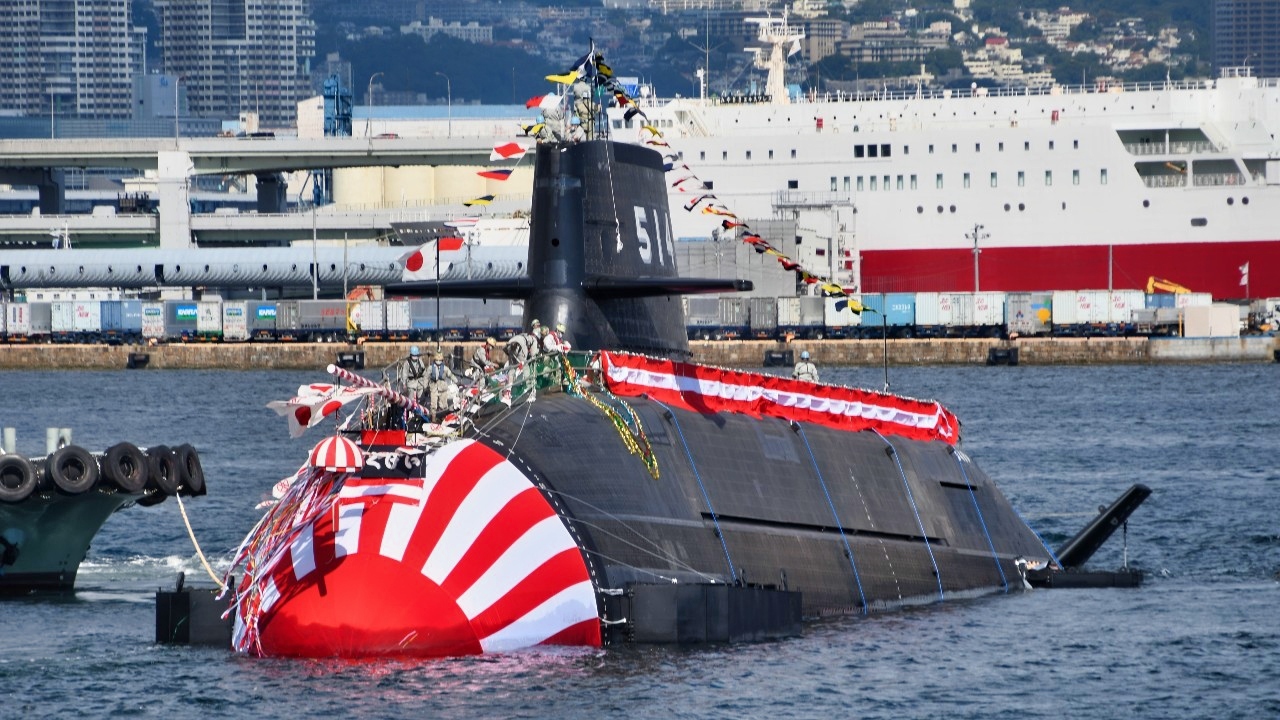
Key Points and Summary – While often overshadowed by China’s massive and rapidly growing fleet, Japan’s Maritime Self-Defense Force (MSDF) is a technologically superior and highly professional navy that should not be underestimated.
-The MSDF prioritizes quality over quantity, fielding advanced Aegis-equipped destroyers and developing new “super destroyers” like the ASEV to counter Chinese threats.
-The navy’s incredible efficiency and professionalism were demonstrated during the 2011 tsunami, where it mobilized a 17-ship flotilla within 18 hours.
-This combination of advanced technology and operational excellence makes the Japanese navy a formidable force in the Indo-Pacific, posing a significant challenge to Chinese naval ambitions.
Japan’s Naval Fleet Is Much More Powerful Than You Think
Japan’s Navy, the Japan Maritime Self-Defense Force (MSDF), is considered one of the most powerful navies in Asia. It’s not the biggest, but its position relative to China’s navy is complex.
China’s navy has surpassed Japan in terms of overall fleet size and missile capabilities, but Japan’s navy is renowned for its high quality, technological sophistication, and emphasis on missile defense.
Many analysts consider Japan’s navy to be more advanced and better than China’s, despite being outnumbered by a significant margin.
Does Japan have the best navy in Asia? It is a difficult question. China now has a very large navy in terms of ship numbers, but in terms of tonnage, it is still second to the United States, for now. And tonnage is significant. The bigger a warship is, the more survivable it is in combat and the longer it can remain at sea. The Japanese are building larger warships than China.
Japan Has Invested in Missile Defense and Technology
The MSDF is renowned for its technologically advanced ships, including destroyers equipped with Aegis combat systems and advanced submarines.
Japan has invested heavily in missile defense, with a focus on intercepting ballistic and cruise missiles.
While China’s navy is larger overall, Japan’s Fleet is organized into effective escort flotillas, designed for defending its territory and sea lanes. Those, however, will soon disappear.
The new reorganization process will abolish the Japan Maritime Self-Defense Force’s Fleet Escort Force and the Mine Warfare Force. A new “Fleet Surface Force,” as tentatively named by the Japanese MoD, will be created instead.
Established in 1961, the Fleet Escort Force has a long history and tradition spanning 63 years. The name of this organization, which has been active on the front lines of Japan’s maritime defense for decades, will disappear.
On September 3, a former Japan Maritime Self-Defense Force (JMSDF) captain and ship commander told Naval News, “For us JMSDF officers who have served under the Fleet Escort Force for a long time, this can be considered a major reorganization.”
This move will enable more and better training, make the Fleet’s surface force more agile, and incorporate amphibious training.
Experience and Professionalism
The MSDF has demonstrated its operational capabilities and efficiency in disaster relief and exercises. During the 2011 tsunami, Vice Admiral Hiromi Takashima, commandant of the Yokosuka Naval District, immediately assumed temporary command of the entire MSDF and ordered all available ships north to the disaster area.
The Japanese Fleet deployed its first rescue ship within 45 minutes and had a 17-ship flotilla supporting the disaster area within 18 hours.
JMSDF ships and helicopters were instrumental in rescuing approximately 19,000 people, roughly 70 percent of the total number of people rescued, from the disaster-stricken areas.
This ability to rapidly sortie the Fleet with virtually no notice was perhaps the true test of the MSDF’s professionalism and efficiency.
CNN reports that Japan is focused on building high-quality, affordable warships, as exemplified by the Mogami-class frigates, which are both speedy and stealthy.
Concern about China’s Growing Capabilities
China is rapidly modernizing its navy and expanding its capabilities in areas like aircraft carriers and anti-ship missiles.
China’s growing naval power is a significant factor in the Indo-Pacific region, and its navy is becoming more aggressive in its operations.
While China’s Navy (PLAN) continues to grow, the Japanese Fleet (MSDF) is building larger and more powerful ships—the future AEGIS System Equipped Vessel (ASEV)—an advanced, large, stealth-guided-missile destroyer is an excellent addition to the Fleet.
Known as a “super destroyer,” according to the Ministry of Defense (MoD), the ASEV measures 190 meters in length, 25 meters in width, and has a standard displacement of 12,000 tons (the full load displacement could exceed 14,000 tons).
By comparison, the JMSDF’s latest Maya-class destroyer is 170 meters long, 21 meters wide, with a standard displacement of 8,200 tons. The ASEV is also 1.7 times heavier than the US Navy’s newest Arleigh Burke-class Flight III destroyer in terms of displacement.
While both Japan and China have their own strengths and weaknesses, one must not discount the strength of the Japanese Fleet.
About the Author:
Steve Balestrieri is a National Security Columnist. He served as a US Army Special Forces NCO and Warrant Officer. In addition to writing on defense, he covers the NFL for PatsFans.com and is a member of the Pro Football Writers of America (PFWA). His work was regularly featured in many military publications.
The Best Tanks on Earth
AbramsX: The Tank the US Army Wants